

On June 7, 2026, Armenia holds parliamentary elections.
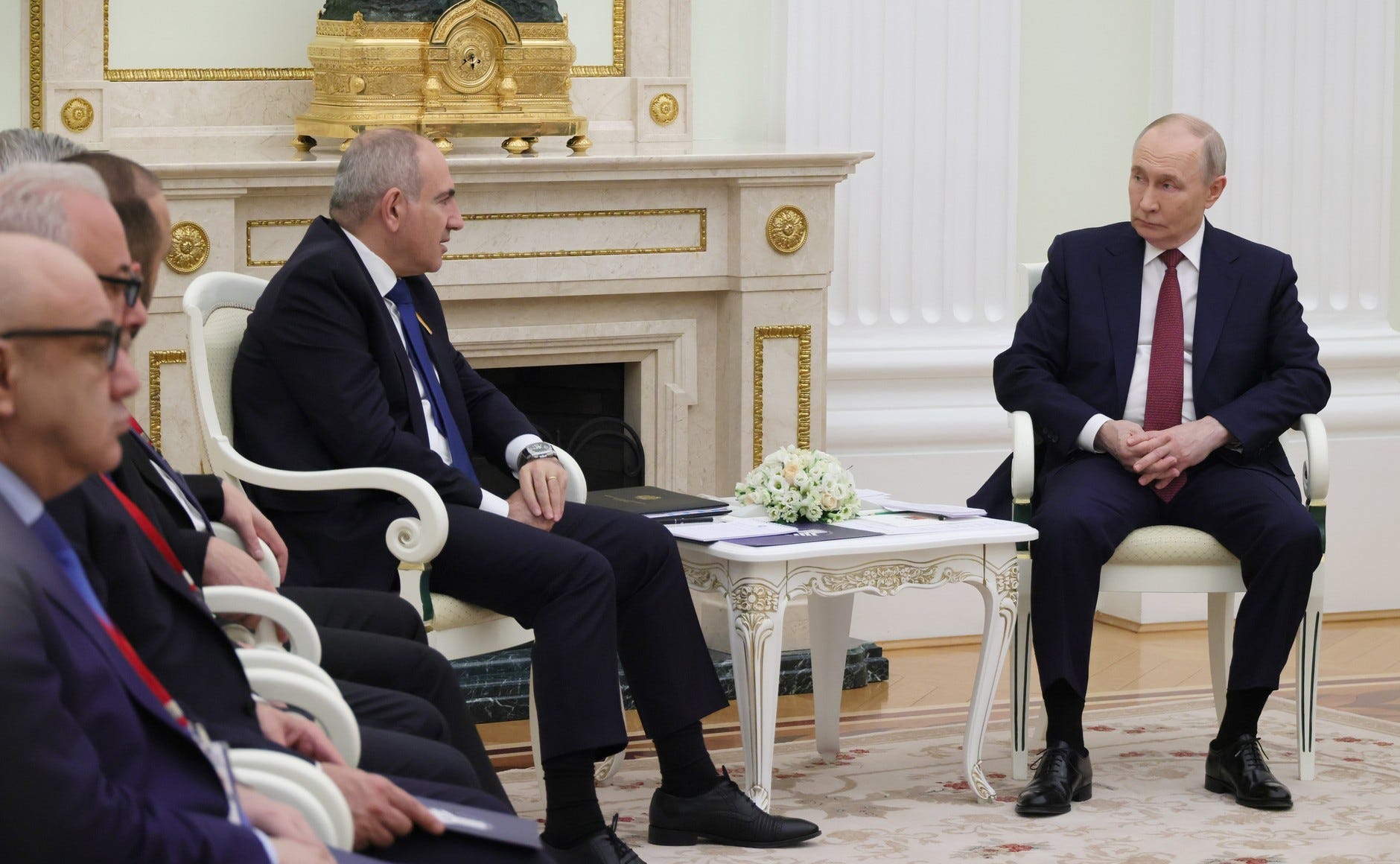
By the time Prime Minister Nikol Pashinyan visited Moscow in early April 2026, Yerevan had already frozen its participation in the Russian-led military alliance and indicated a desire for closer ties with the EU and the US. During that meeting, Vladimir Putin chided Pashinyan, complaining that pro-Russian politicians in Armenia were being kept in prison despite holding Russian passports. Pashinyan responded with a lecture on Armenian democracy, assuring Putin that there are no political prisoners in the country.
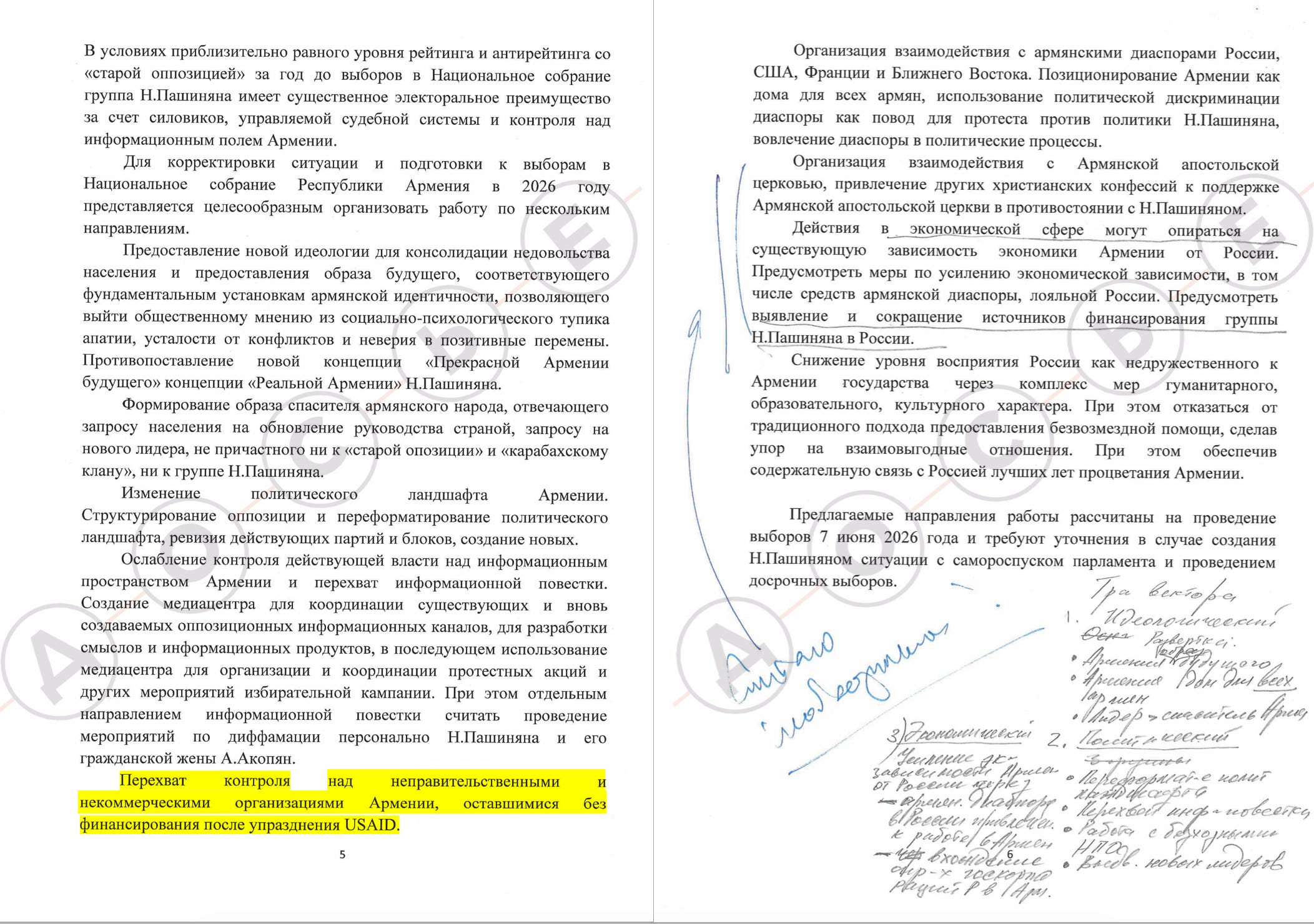
While Putin claimed the Kremlin does not interfere in neighboring elections, leaked documents obtained by Dossier Center show otherwise. The investigation reveals an operation built around multiple opposition candidates, a contingency plan for fusing them into a coalition after the vote, and a broader strategy to influence civil society—including a plan to take over Armenian NGOs left without funding following the dissolution of USAID.
The “Savior” Candidate with Ties to the FSB
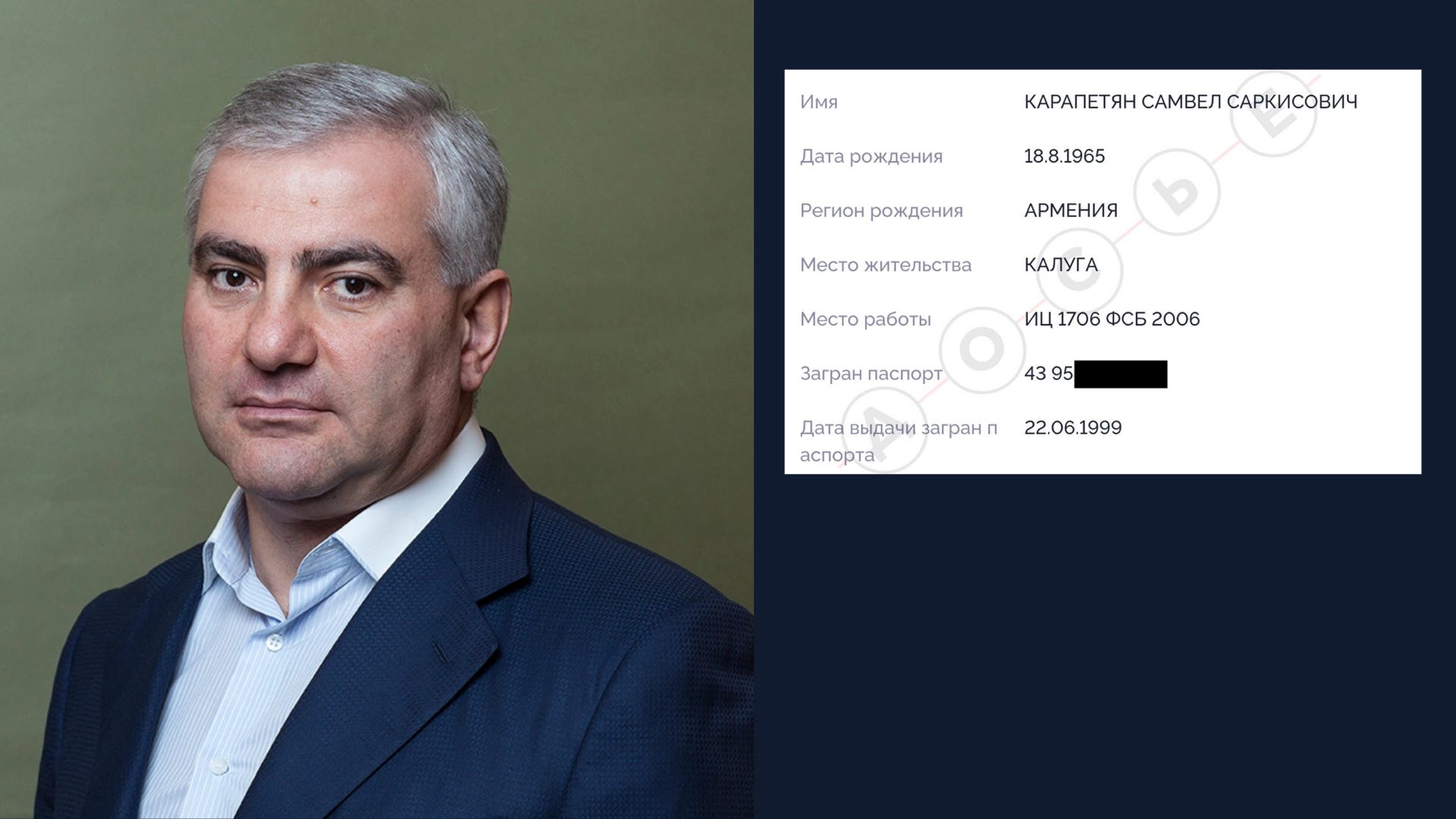
The Kremlin’s primary candidate to serve as the nation’s “savior” was Samvel Karapetyan, founder of the Moscow-based Tashir Group, a Russian holding company of over 200 companies and roughly 45,000 employees. Karapetyan met a list of specific requirements: he was not connected to the discredited “old opposition,” the “Karabakh clan,” or Pashinyan’s group.
However, his ties to the Russian state were deep. He held Russian state awards and strong ties to Russian state and church circles. Crucially, in Russian databases from 2006, his workplace was listed as “IC FSB” (Information Center of the FSB), a designation typically used for informants or foreigners operating under FSB control.
The operation around him was detailed: plans included a television channel, a media holding company, a legal defense committee for his anticipated arrest, and the launch of a new political force on his birthday on August 18, followed by a “National Wellbeing” program on Armenian Independence Day, September 21.
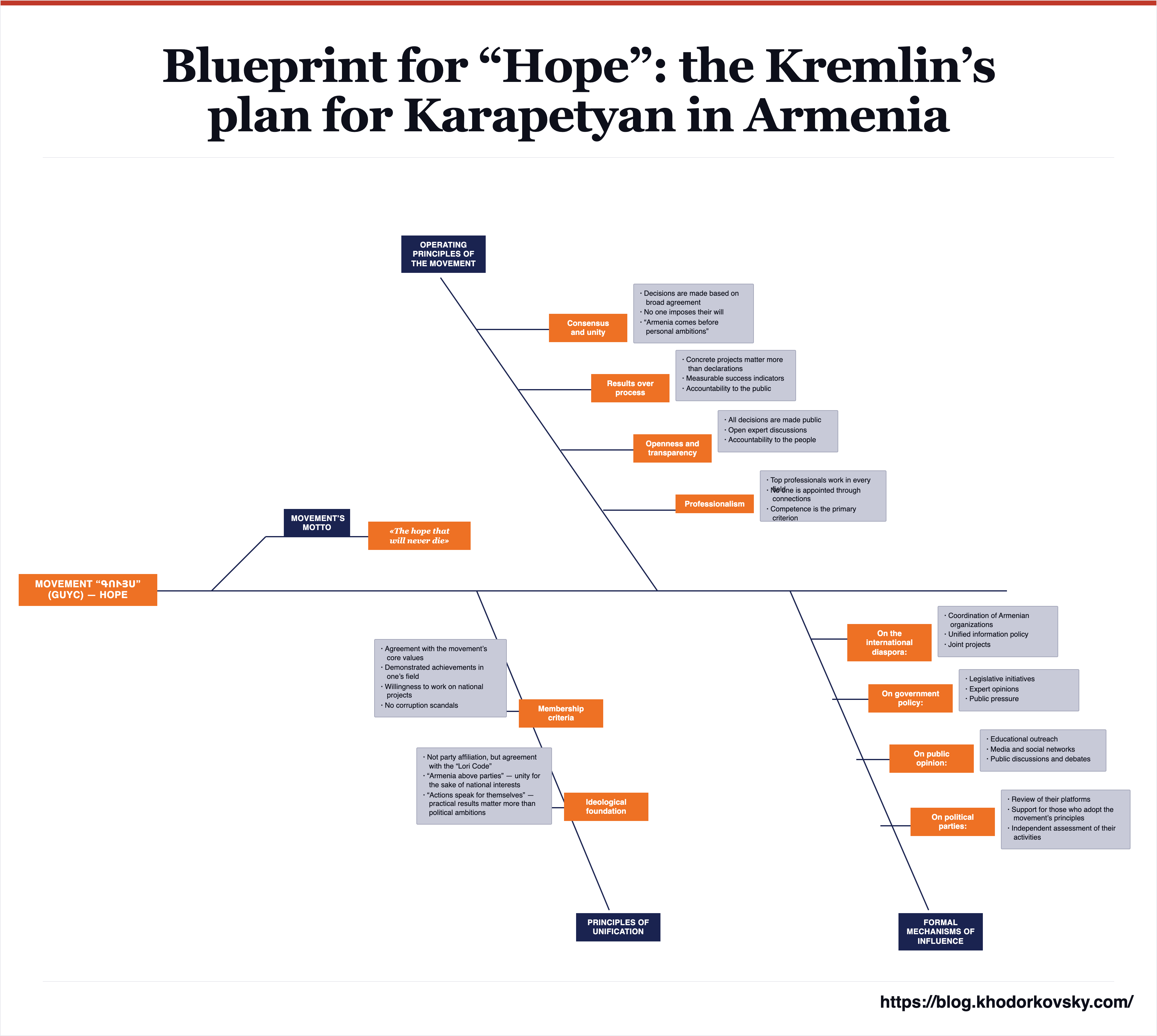

Of these milestones, only the movement launch was hit close to schedule. Karapetyan announced Mer Dzevov (”Our Way”) on August 13, 2025, from a pretrial detention cell, after his arrest in June on charges of publicly calling for the violent seizure of power. His nephew Narek became the movement’s nominal head. The movement was later registered as a party and renamed Strong Armenia in December 2025.
The “Strong Russian Armenia” Problem
By the autumn, the Kremlin’s own consultant on the project, Gleb Kuznetsov—head of the expert council at the Expert Institute for Social Studies (EISI), an institute closely tied to the Russian Presidential Administration—concluded that Karapetyan’s profound ties to Russia were a liability.
Karapetyan legally could not be a deputy or prime minister due to holding Russian and Cypriot passports alongside his Armenian one. (In April 2026, Karapetyan announced he would renounce his foreign citizenships, though achieving this before the election was unlikely). Furthermore, he had entered the “pre-sanctions zone” as a major Gazprom contractor; his villa in France, attributed by French prosecutors to a Gazprom subsidiary, had been seized by the authorities.
In a February 2026 project analysis, Kuznetsov noted that Karapetyan was automatically perceived as a Kremlin project. Kremlin propagandists Vladimir Solovyov and Margarita Simonyan had publicly endorsed him, prompting a protest from the Armenian foreign ministry.
Analysts, Kuznetsov reported, were already joking that Karapetyan’s registered party should be renamed “Strong Russian Armenia.”
When Karapetyan’s numbers began to fall, accelerated by a January 2026 podcast appearance in which his son proposed a “ministry of sex” to address Armenia’s demographic crisis, and later by a visit from U.S. Vice President J.D. Vance, who publicly endorsed Pashinyan, the Russian team activated a second track.
The Backup: Arman Tatoyan and “Wings of Unity”
The second track centered on Arman Tatoyan, a 44-year-old lawyer and former Armenian ombudsman. His biographical file for the Presidential Administration emphasized his fluency in Russian, his Russian-language doctoral dissertation, and his close collaboration with Russian ombudsmen and structures within the Eurasian Economic Commission.
In October 2025, Tatoyan announced his political participation through the initiative “Wings of Unity” («Крылья Единства»), which was registered as a political party by mid-April 2026. The plan was to position him as a clean, institutional, progressive candidate.
The campaign was designed inside the same Russian institute with the Kuznetsov’s wife, Karine Sarkisyan, preparing the launch document. Kuznetsov also suggested a reading list for Tatoyan in December 2025, a document riddled with hallmarks of AI writing.
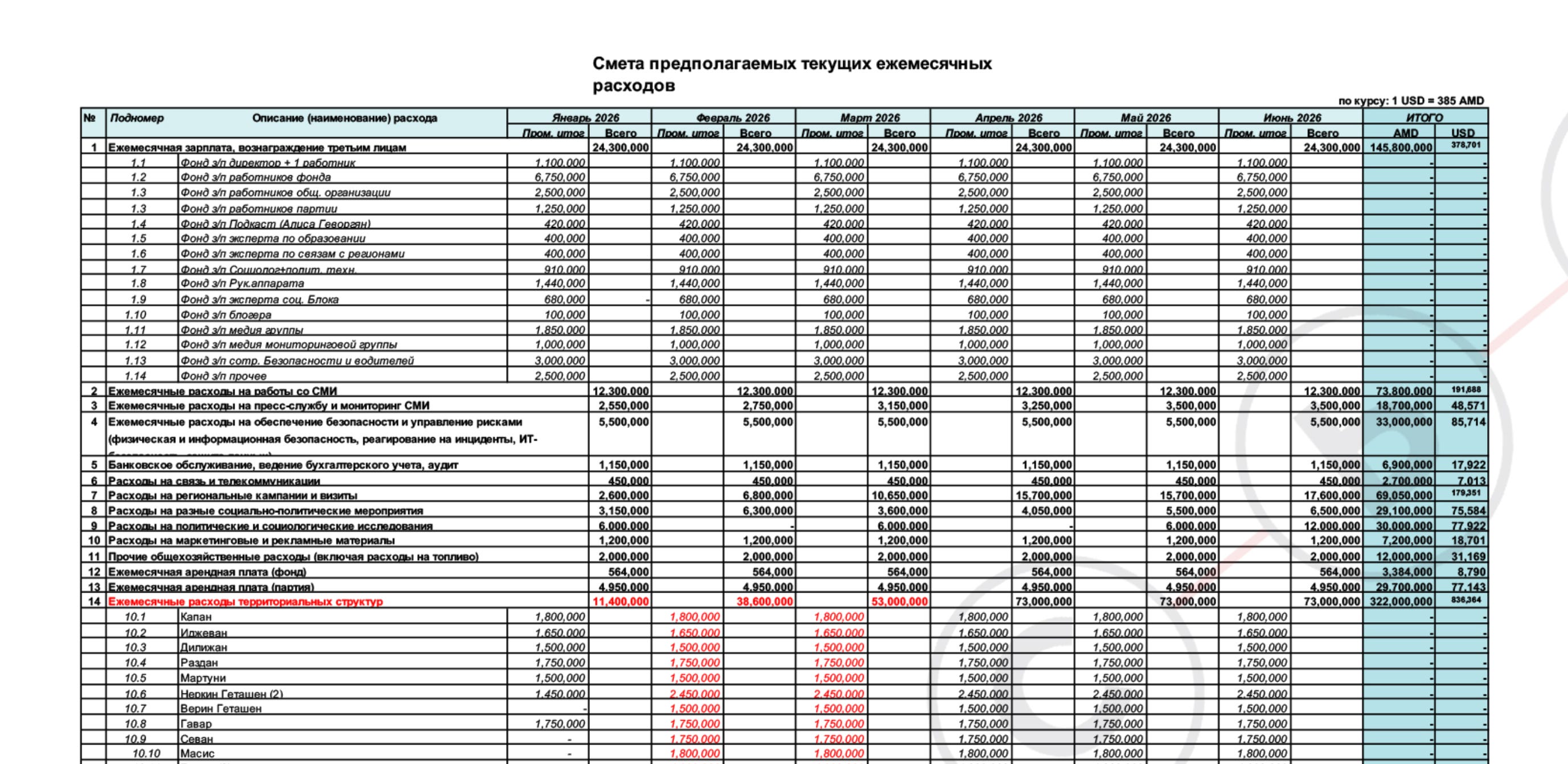
Financial spreadsheets authored by Davit Ananyan (former head of Armenia’s State Revenue Committee) outlined the costs. One document projected a five-month campaign budget of 926.7 million drams (about 185.6 million rubles), covering regional headquarters, salaries, and advertising. A separate document detailed a Moscow staff salary fund and a permanent research program consisting of two quantitative studies and ten focus groups per month. An edit on one of these estimates was traced to Yekaterina Sokolova, deputy director of EISI.
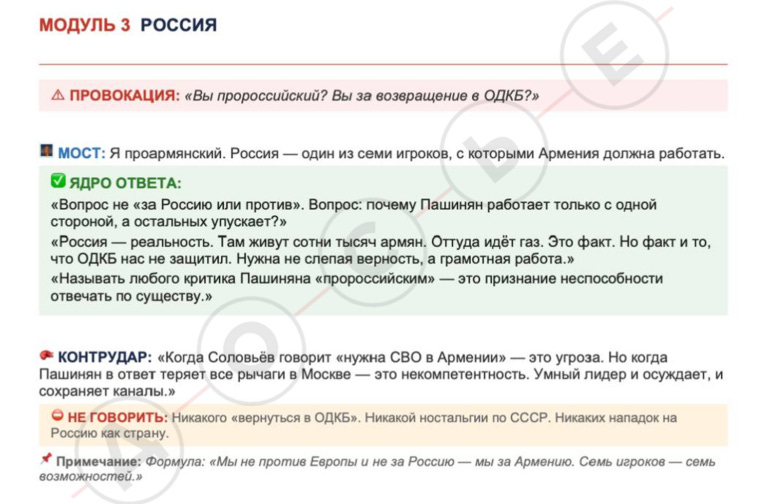
The instructions to Tatoyan included a script for handling questions about Russia. He was instructed to say he was “pro-Armenian,” that Russia is simply “a reality” (citing gas dependence and large Armenian diaspora), and to question why Pashinyan only worked with one side. He was explicitly told not to call for a return to the CSTO, refrain from expre, and not to attack Russia.
The campaign struggled to launch. By February 2026, Sarkisyan complained that Tatoyan’s operation lacked a media plan, travel schedule, or approved slogans. By March, his polling stood at 7.8 percent, short of the 10 percent target set by the Russian team.
Unmoving Polls
A third Russian document proposed a post-election coalition: Karapetyan and Tatoyan would merge. Tatoyan would carry the institutional, moderate message, while Karapetyan would handle the “geopolitical, resource, and conservative” side. Together, they would form an anti-Pashinyan majority cleansed of any toxic association with former president Robert Kocharyan.
To aid the final stretch, the Russian team designed two parallel information campaigns: “Anyone But Pashinyan” (to prevent the splintering of the protest vote) and “Come Out” (to drive turnout based on regime fatigue).


Despite a sustained, well-resourced political-technology operation, the polls tell the final story. A summer 2025 poll commissioned by the Russians showed only 16 percent of Armenians wanted closer ties with Russia, while 57 percent preferred neutrality and 22 percent favored the EU. The Kremlin spent the next year trying to move that number.
As of May 2026, the Armenian Election Study reports Pashinyan’s approval has risen to 49 percent, and his Civil Contract party retains a substantial lead. Of the opposition forces Moscow backed, only Karapetyan’s Strong Armenia is currently projected to clear the four-percent threshold. The “Anyone But Pashinyan” and “Come Out” information campaigns were never implemented, and the Russian political consultants’ recommendations seem to have failed to secure a victory for any of their candidates.
Any project associated with the name Kuznetsov would seem doomed to me, let's hope this fares no better than that unfortunate ship.
Great news.