

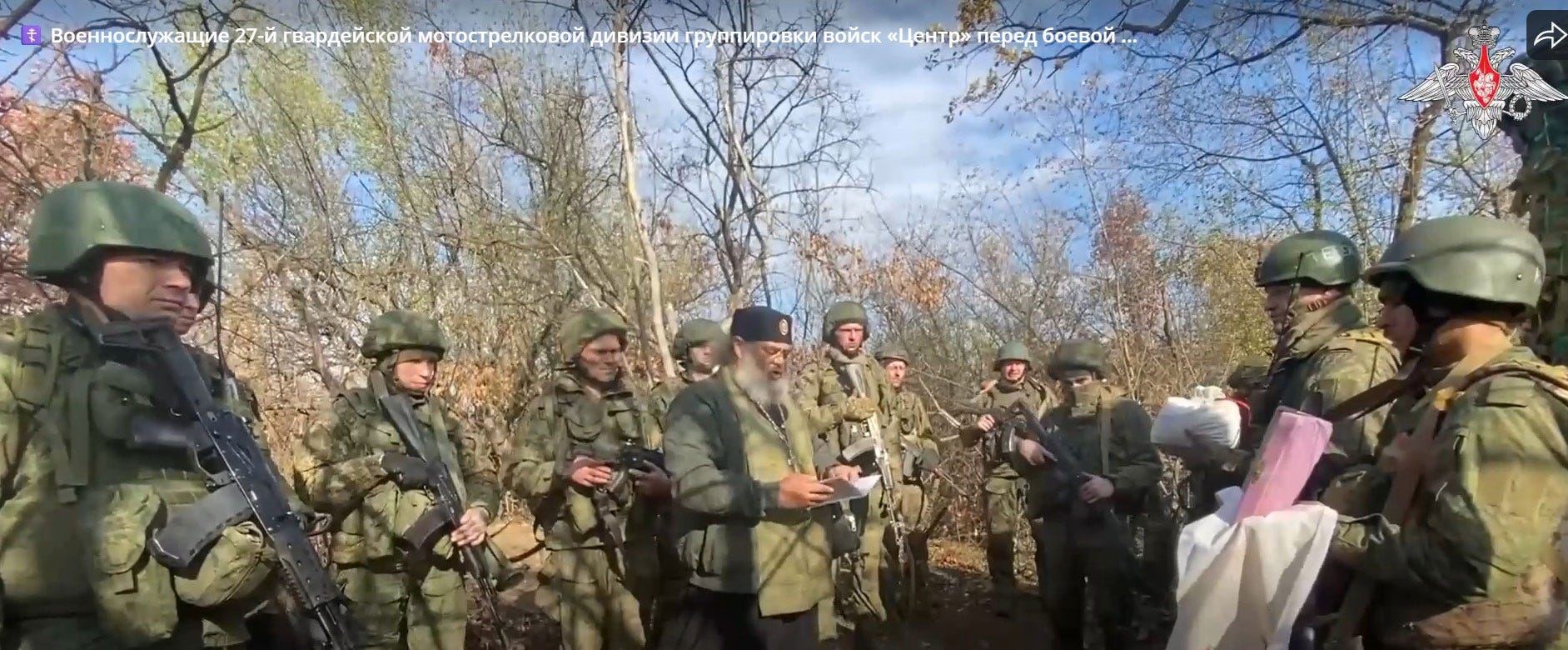
A Russian soldier’s chances of surviving the war in Ukraine may be far lower than official narratives suggest. An investigation by the Dossier Center offers a rare, data-driven look at how one frontline formation — the 27th Guards Motor Rifle Division — has been used since early 2024. The picture that emerges is of a system that sustains itself through constant replenishment, absorbing heavy losses as a matter of routine.
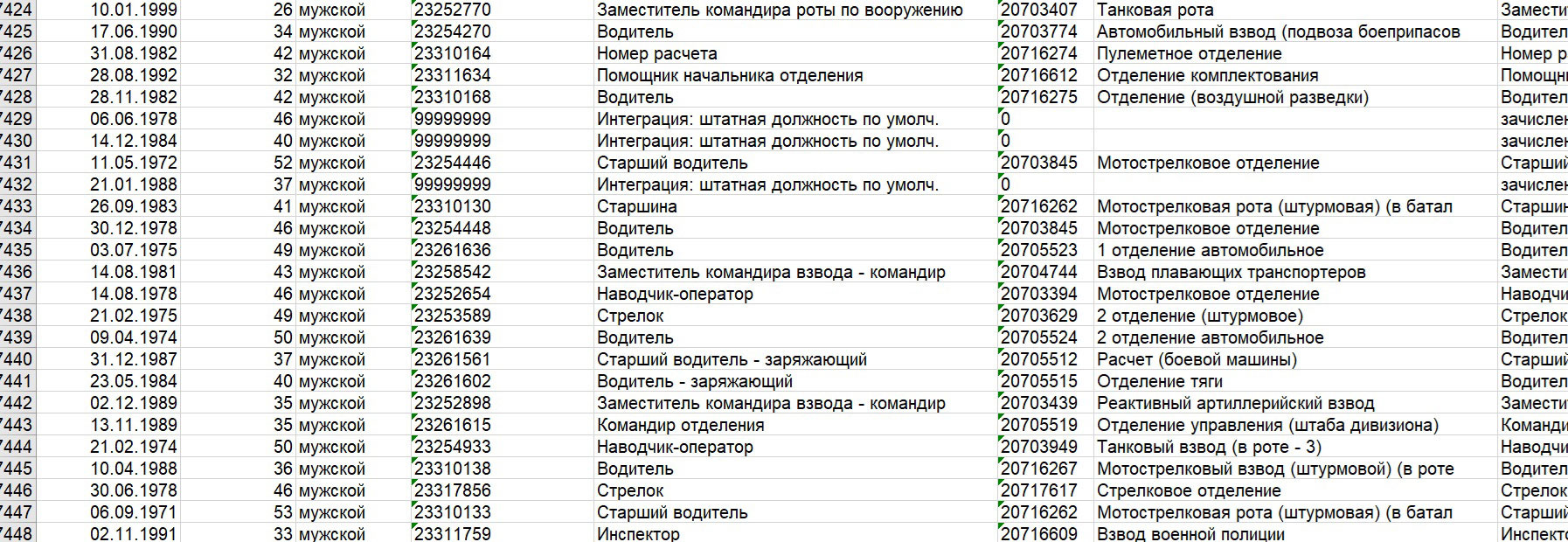
The documents were obtained from Captain Oleg Miller, who deserted the Russian army and took with him detailed personnel lists covering the division from early 2024 through January 2025. The records include every serviceman assigned to the unit, from senior command down to support staff. They provide a clear view into both the division’s structure and its losses.
A division that replaced itself
Over the course of 2024, 28,234 individuals were added to the division’s rolls. On paper, a motor rifle division of this type should not exceed 12,000 to 14,000 personnel. The discrepancy is too large to explain through bureaucratic turnover. Within a single year, the division consumed and replaced its entire fighting strength.
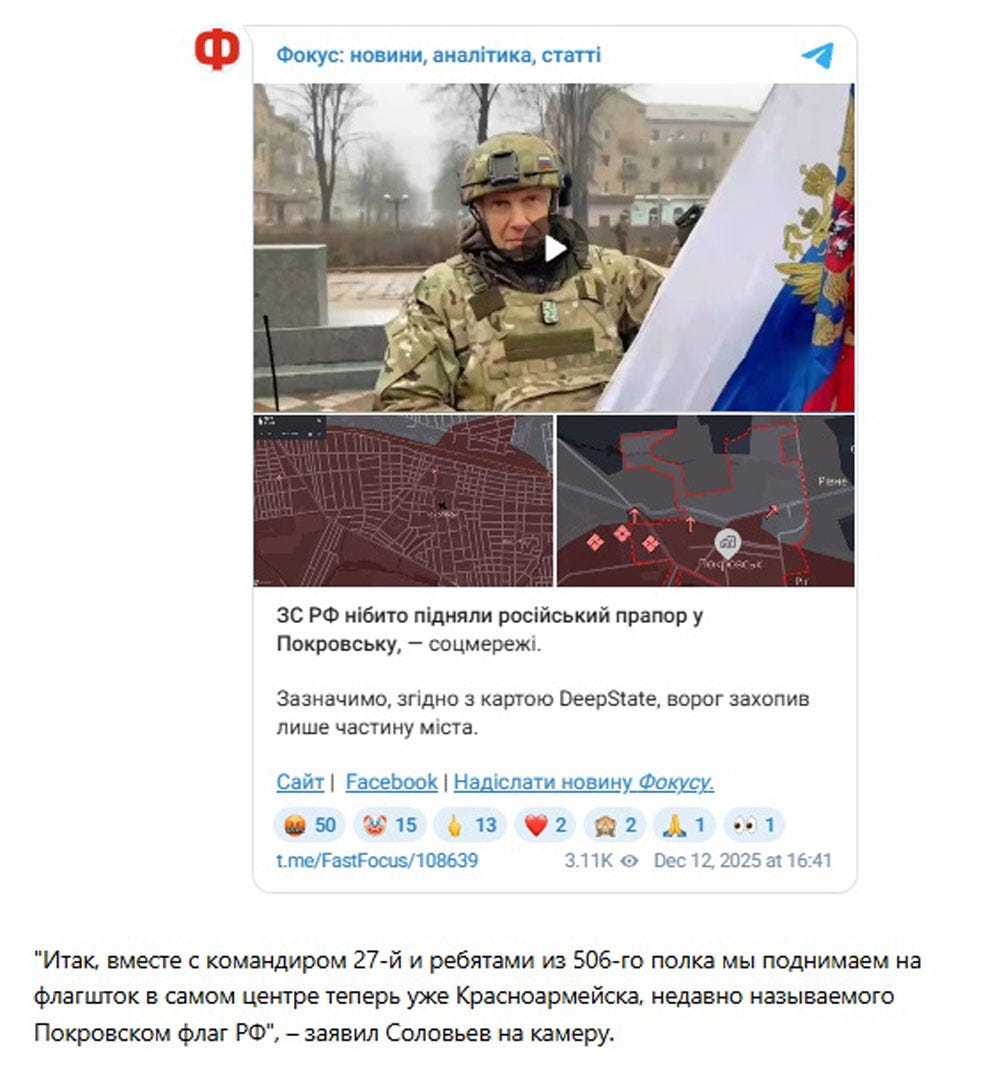
The 27th Division has not been rotated out of combat and rebuilt. It has remained continuously engaged since early 2024, fighting on the Avdiivka–Pokrovsk axis. Under normal military practice, a unit sustaining this level of attrition would be withdrawn, reconstituted, and retrained. That has not happened. Instead, the division has been kept in place, its losses absorbed by a steady inflow of new recruits.
These recruits are not distributed evenly across the formation. Headquarters, logistics, communications, engineering, and artillery units operate at some distance from the front line and sustain comparatively low losses. Vacancies in those areas are limited. New arrivals are overwhelmingly directed to frontline rifle companies, where the demand for replacements is constant.
The system resembles an assembly line. Contract soldiers are sent into assault companies. They are killed, wounded, captured, or simply disappear. Their places are filled by the next intake. The process continues with little interruption.
The 433rd Regiment
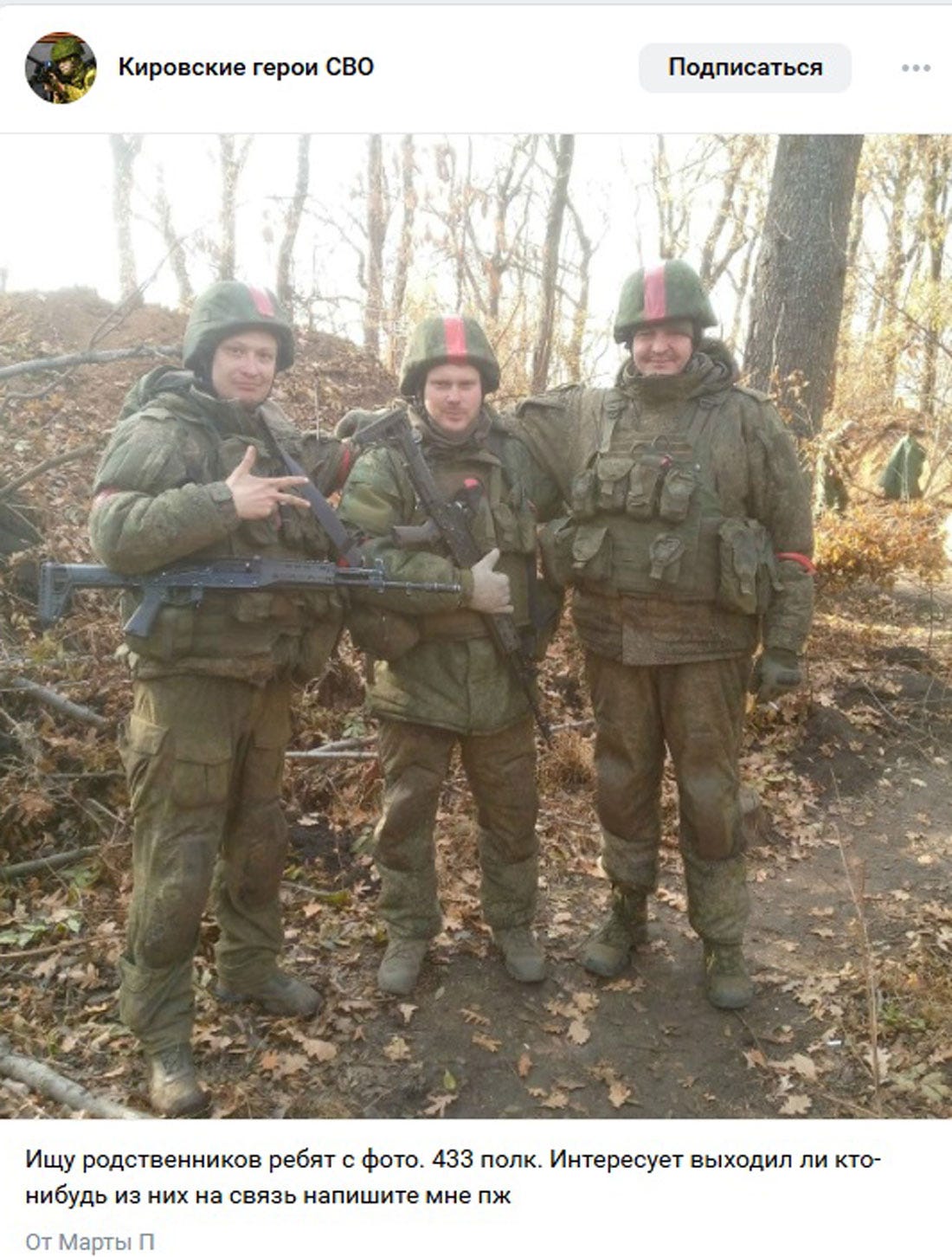
The 433rd Motor Rifle Regiment, one of four within the division, appears to have borne the heaviest losses. When it first appeared at the front in April 2024, it had 1,720 personnel. Over the course of the year, 6,857 soldiers passed through its rolls. Approximately 5,000 are gone — including 1,816 listed as “missing for more than one day.”
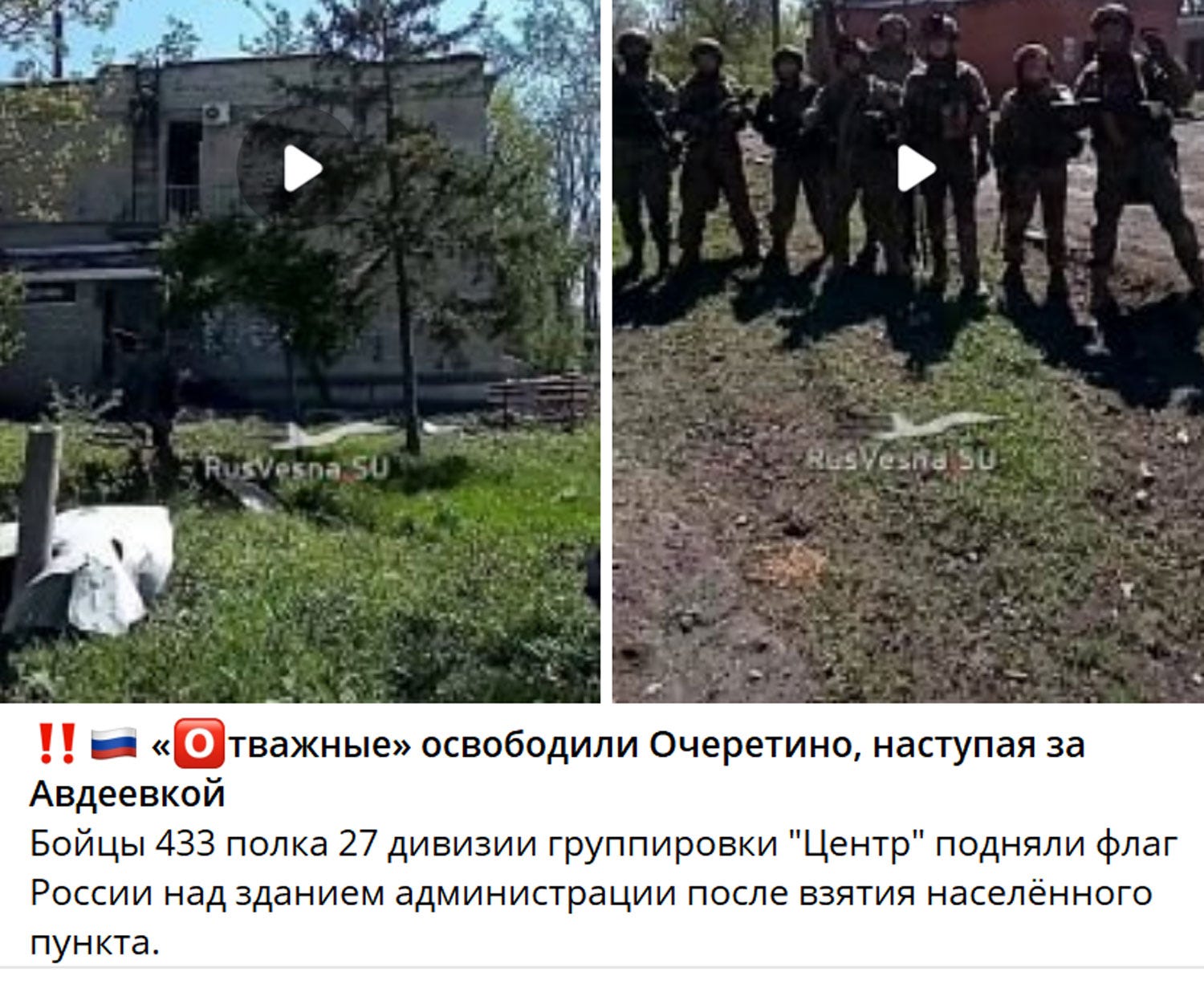
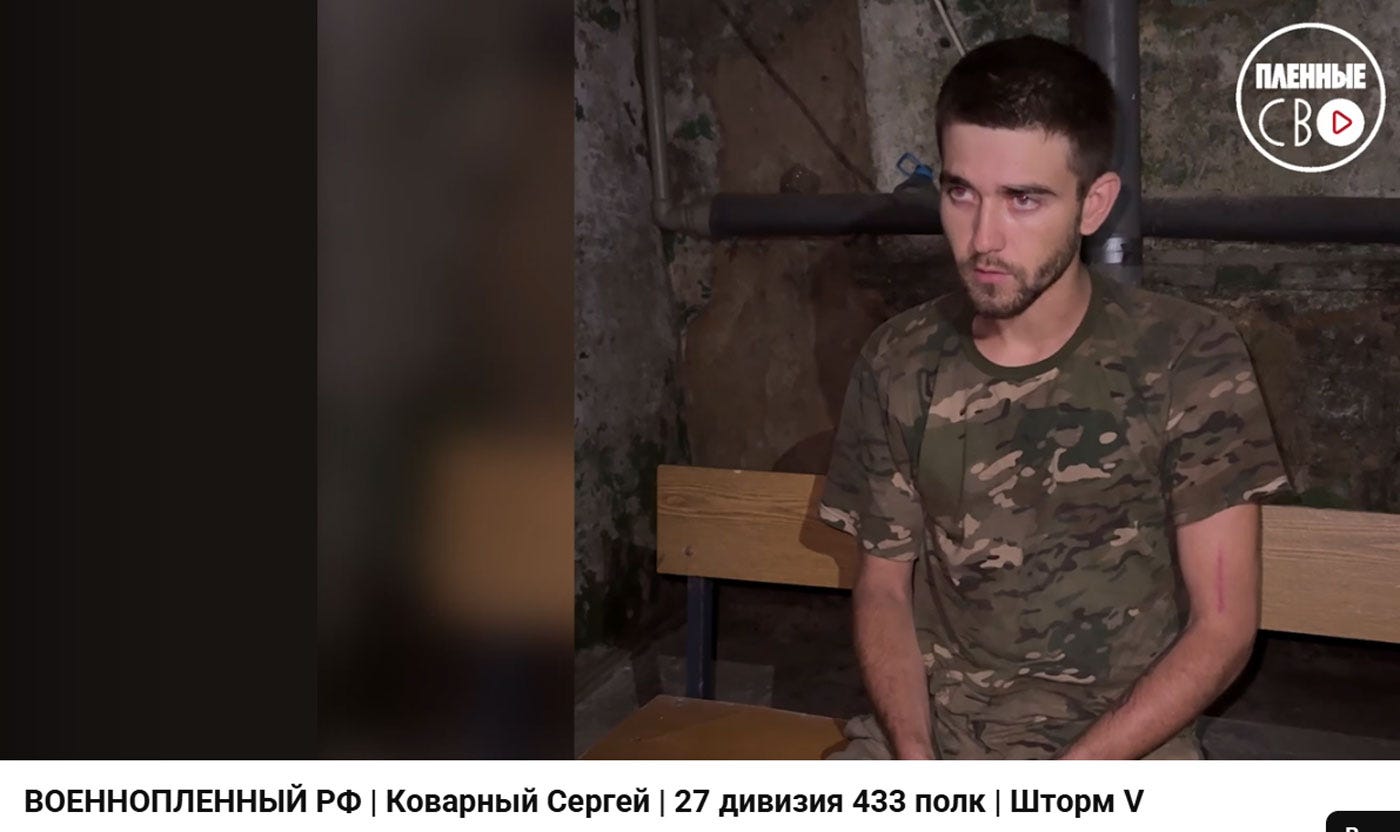
This last category is significant. According to the division’s own documentation, only 12 deaths were recorded across the entire formation in 2024. That figure is not credible. Open-source verification already identifies far more confirmed fatalities. The Dossier Center spot-checked 100 individuals from the “missing” category. Of those, 51 percent were confirmed dead through publicly available information. Another 13 percent were listed under circumstances strongly suggesting death. No evidence was found that any of those sampled were still alive. The remainder left no trace in public records — a gap explained by delayed death confirmations, absent relatives, or the lack of formal reporting.
Calculating the true toll
Extrapolating from this sample, the number of dead and missing in the division likely approaches 5,000 for 2024 alone. Estimates by Mediazona and BBC Russian suggest that severe wounds resulting in permanent removal from service occur at roughly twice the rate of fatalities. If that ratio holds, the division may have suffered around 10,000 such injuries in the same period. Total irreversible losses: roughly 15,000 in a single year.
The arithmetic is consistent. A division of no more than 14,000 is cycling through more than 28,000 in a year. The difference is casualties.
At the division level, these figures translate into an annual probability of death of 15 to 17 percent, and a 30 to 35 percent probability of being severely wounded and permanently removed from service. But these averages are misleading. Safer roles are largely stable and generate few vacancies. New recruits are funneled disproportionately into the most dangerous positions — frontline rifle companies tasked with assault operations.
In the 433rd Regiment, the data suggests roughly one in four soldiers may have been killed within a year. When severe injuries are included, the probability of being killed or permanently incapacitated rises sharply. New arrivals, who are disproportionately assigned to these roles, face the highest risk of all.
The Wagner model, updated
The structure bears a clear resemblance to the model the Wagner Group employed under Yevgeny Prigozhin: a protected core of command and support units combined with expendable assault detachments, composed largely of convicts promised release after six months if they survived.
The current system relies on contract soldiers who have, in formal terms, volunteered. In practice, many appear to have had limited understanding of the conditions they would face. Unlike Wagner recruits, they are not serving fixed terms with a defined endpoint. Their options have been reduced to four: death, severe injury, capture, or desertion.
Desertion is difficult to quantify. The records include 2,691 cases of unauthorized absence across the division, 893 of them in the 433rd Regiment alone. The data does not clearly distinguish between permanent desertion and temporary absence due to leave, injury, or administrative issues. The scale, however, is telling.
Who is fighting
The composition of the division reflects the strain on Russia’s military manpower. A significant proportion of officers appear to be reservists or individuals who received minimal training before being assigned to command roles. Large numbers of junior lieutenants — a rank rarely used in peacetime — suggest accelerated and improvised commissioning. Many officers are significantly older than would be typical for their rank in a professional force.
Age does not appear to confer any advantage in survival. The data indicates that older soldiers are more likely to be killed. One documented fatality involved a 64-year-old private.
All of this… to what end?
Over nearly two years of active combat, the division has advanced across a sector approximately 50 kilometers wide along the front line. The cost, measured in casualties, runs into the tens of thousands.
For the command structure, the system functions as intended. Units that sustain heavy losses continue to operate, and their commanders are rewarded. The 433rd Regiment, despite its casualty record, was awarded Guards status in early 2025. Its commander was promoted. So was the division commander.
The personnel are replaceable. The structure endures.
The Dossier Center’s findings, grounded in internal records rather than external estimation, provide one of the clearest pictures to date of how Russia sustains its war effort. For many of those sent to the front — particularly the contract soldiers funneled into assault companies — survival is not the expected outcome. Their lives are treated as a consumable input in a system whose true purpose has nothing to do with their survival, and everything to do with keeping Putin in power.
The poor Russian girls are going to end up like British spinsters after WW I with no men to marry. Russia is being weakened by demographic disaster.
There was already a serious demographic issue in Russia, using people as canon fodder will exasperate that. Well, it would appear the war will solve itself, once the population declines enough