

My colleagues at Dossier have spent three years tracing what happened to Prigozhin’s men and businesses after his death. Their investigation now covers people who keep African rulers in power, who acquire mining rights and organise PR campaigns against Western influence.
This is Prigozhin’s empire. After his death, Putin’s officials took over most of it.
Under new management
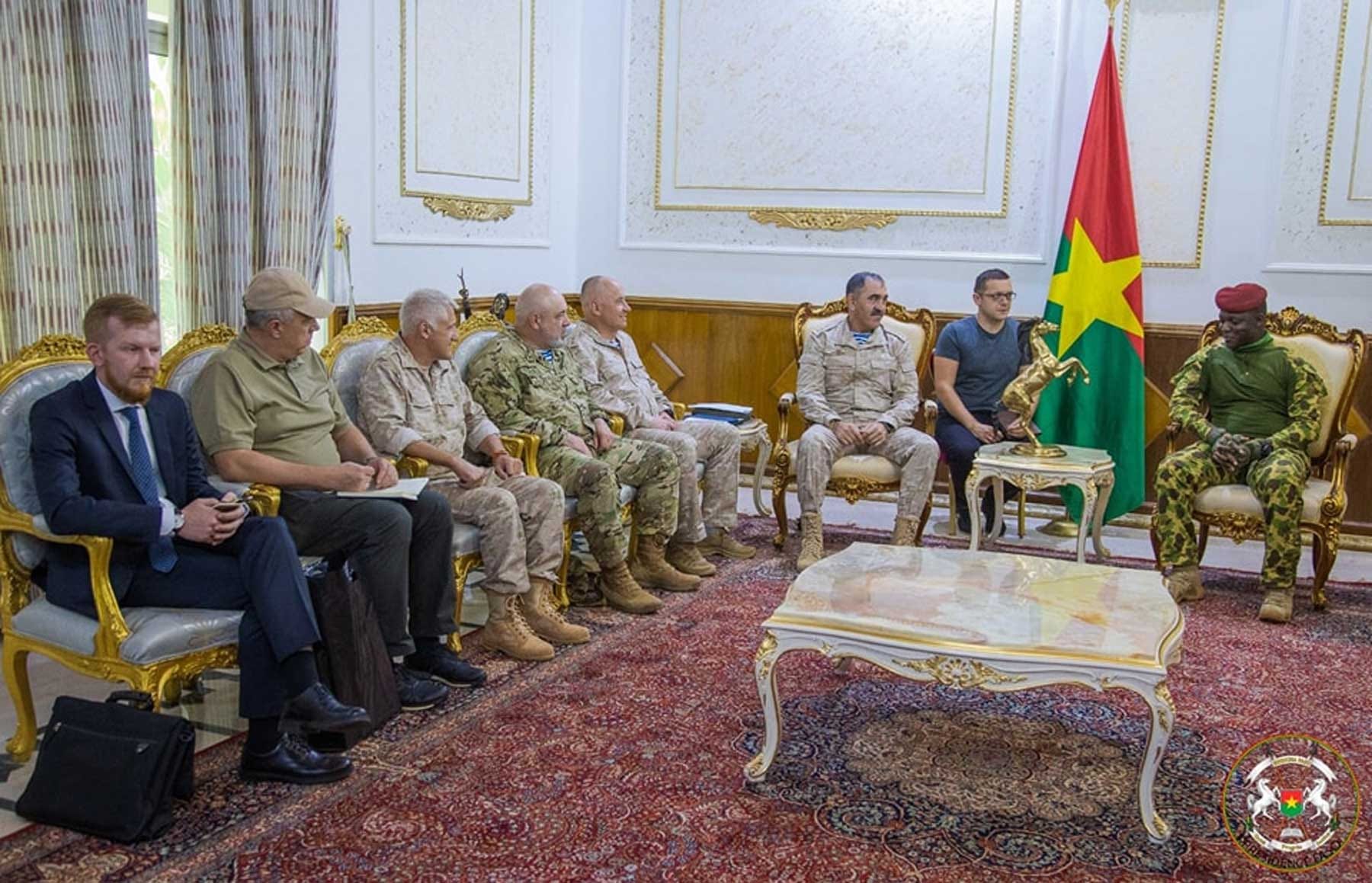
Within a week of Prigozhin’s death in August 2023, Russia’s deputy defence minister and a military intelligence general were in Burkina Faso. They were offering its military ruler troops and political support. The Defence Ministry’s Africa Corps gradually absorbed fighters and contracts across the Sahel. Russia’s foreign intelligence service, the SVR, took charge of a revived version of Prigozhin’s African political operation.
In the Central African Republic, the government preferred to keep Wagner: its men already had relationships with local officers, and the authorities preferred paying through access to resources rather than cash. Wagner retained more autonomy there, while coordinating with Moscow’s military. It also guarded a very profitable asset: the Ndassima gold mine, whose development rights had gone to a Prigozhin-linked company. A 2025 report estimated the mine’s illicit annual revenue at more than $100 million.
Campaigns of intimidation and PR
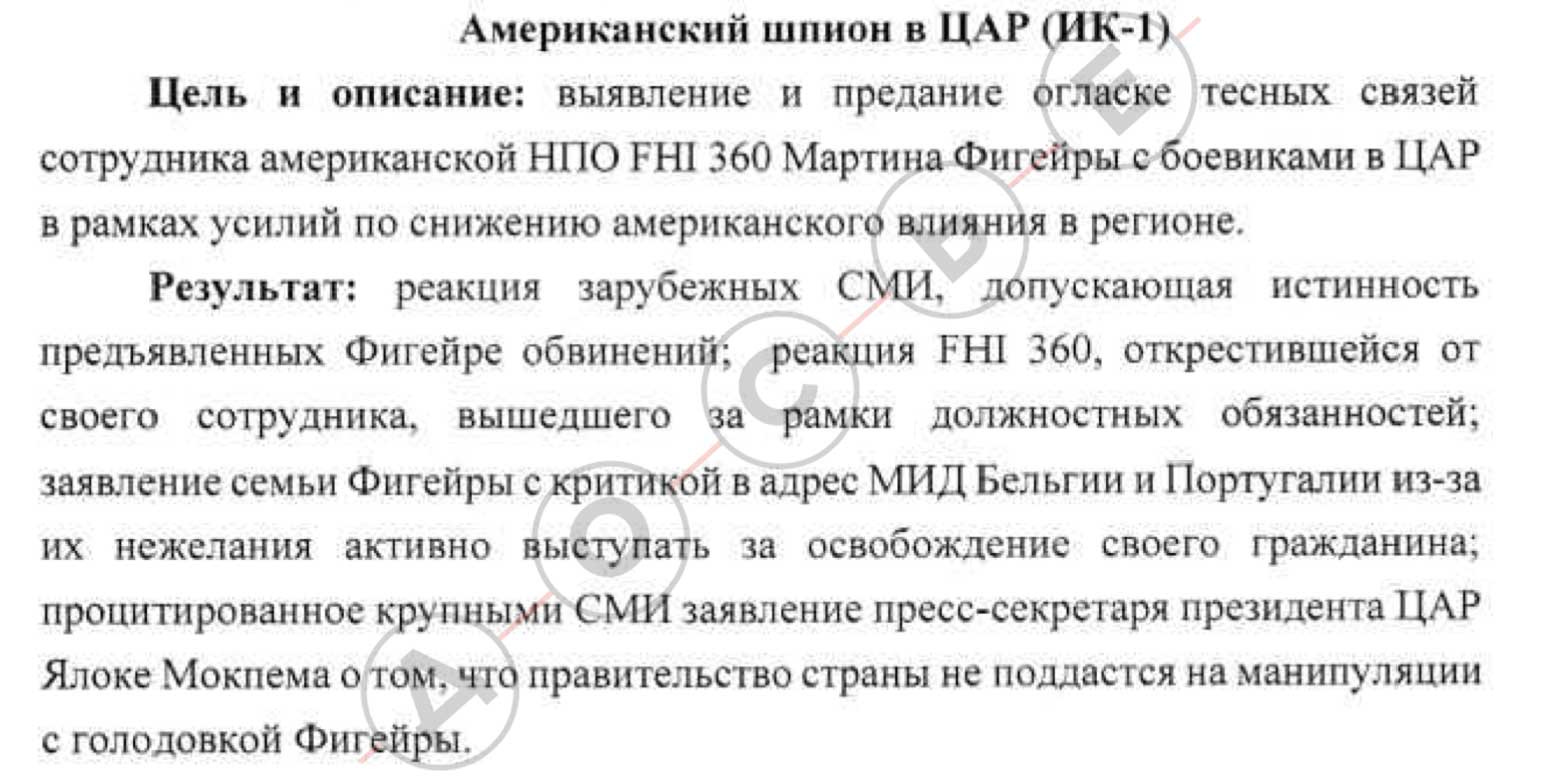
In May 2024, three Wagner men detained Joseph Figueira Martin, a Portuguese consultant for the American aid organisation FHI 360, in a bar in the Central African town of Zemio, with a local gendarme present. He was accused of spying for the United States. Why he was originally singled out remains unclear, but leaked Russian reports explain how political operatives used his imprisonment to attack American influence in the country.
Martin says his captors beat him and chained his wrists to his ankles. Later, in a police detention centre in Bangui, the capital, a Russian visitor arrived carrying cigars and a book with Prigozhin’s face on the cover. “I will kill you. You will die in Bangui,” Martin recalls him saying. Dossier identified the visitor as Denis Suprunov, a Wagner veteran and instructor. According to Martin, Suprunov almost cried when he spoke about his dead employer.
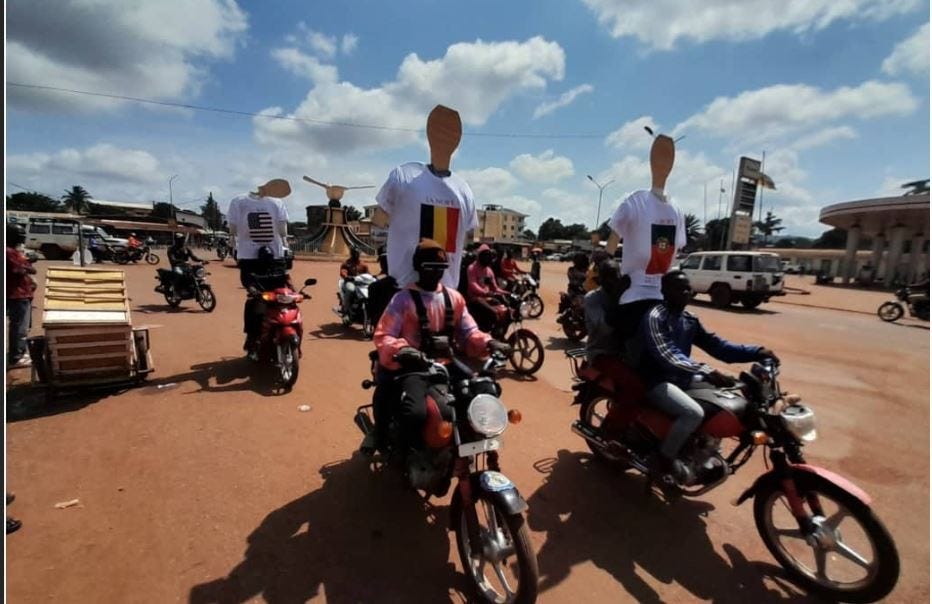
Outside the prison, Prigozhin’s former political staff were arranging a campaign against the prisoner. Radio Lengo Songo, founded by Prigozhin’s employees, published his photograph and called him an American spy. The organisers paid for dozens of articles and other press coverage, and arranged demonstrations against him. At one, mannequins were hung from makeshift gallows. Their reports claimed the campaign had weakened international pressure for Martin’s release and encouraged the Central African authorities to hold firm. He remained in custody until April 2026, when Portuguese diplomats negotiated his release.
From Africa to the Balkans
Other former Prigozhin employees were helping prepare unrest and sabotage in Europe. One operation involved Moldova, where Moscow has tried for years to prevent a decisive turn towards the West. In summer 2024, around 15 young Moldovans arrived at a camp near Banja Luka, in Bosnia and Herzegovina. Russian instructors taught them to operate drones and confront police. According to Moldova’s intelligence service, they were being prepared to organise unrest.
Dossier recognised several instructors from its investigations into Prigozhin. Georgy Bubnov had worked in security for his company Concord before going to the Central African Republic. Alexander Volkhonsky had taught surveillance and recruitment in Prigozhin’s African operation. Witnesses said Volkhonsky taught the Moldovan recruits how to break through police cordons and prepare incendiary mixtures. One trainee described being sent into Banja Luka to map government and diplomatic buildings, along with places from which to launch drones.
When Bosnian authorities discovered the camp, the instructors moved it to Serbia and finished the course there. Some recruits then headed home with drone equipment. Someone was supposed to collect it in Romania so they could enter Moldova without it, but nobody appeared. On 11 October 2024, they reached the Moldovan border with the equipment still in their bags and were arrested.
Recruiters also sought people already living in Europe. In March 2024, the Wagner-linked Telegram channel Grey Zone advertised a contact called “Privet-bot”. OCCRP journalists investigating sabotage recruitment reached a real person through it, offering paid assignments. Later advertisements in French asked for information about soldiers, police and intelligence officers.
Putin had every reason to distrust Prigozhin’s men after the mutiny. Yet his government kept employing them, and his officials took over much of the work they had been doing. The people now directing those operations bear responsibility for them, however long Prigozhin’s name remains attached.
Dossier’s documentary has more of the evidence. Also available as an article in Russian.
Excellent and informative nas usual. Question: why did Prighozin get onto that plane? Didn't he realize that Putin doesn't forgive and forget?
Well done indeed. The Khodorkovsky team must continue to reveal the nefarious and down right evil activities of Putin and the FSB/SVR.