

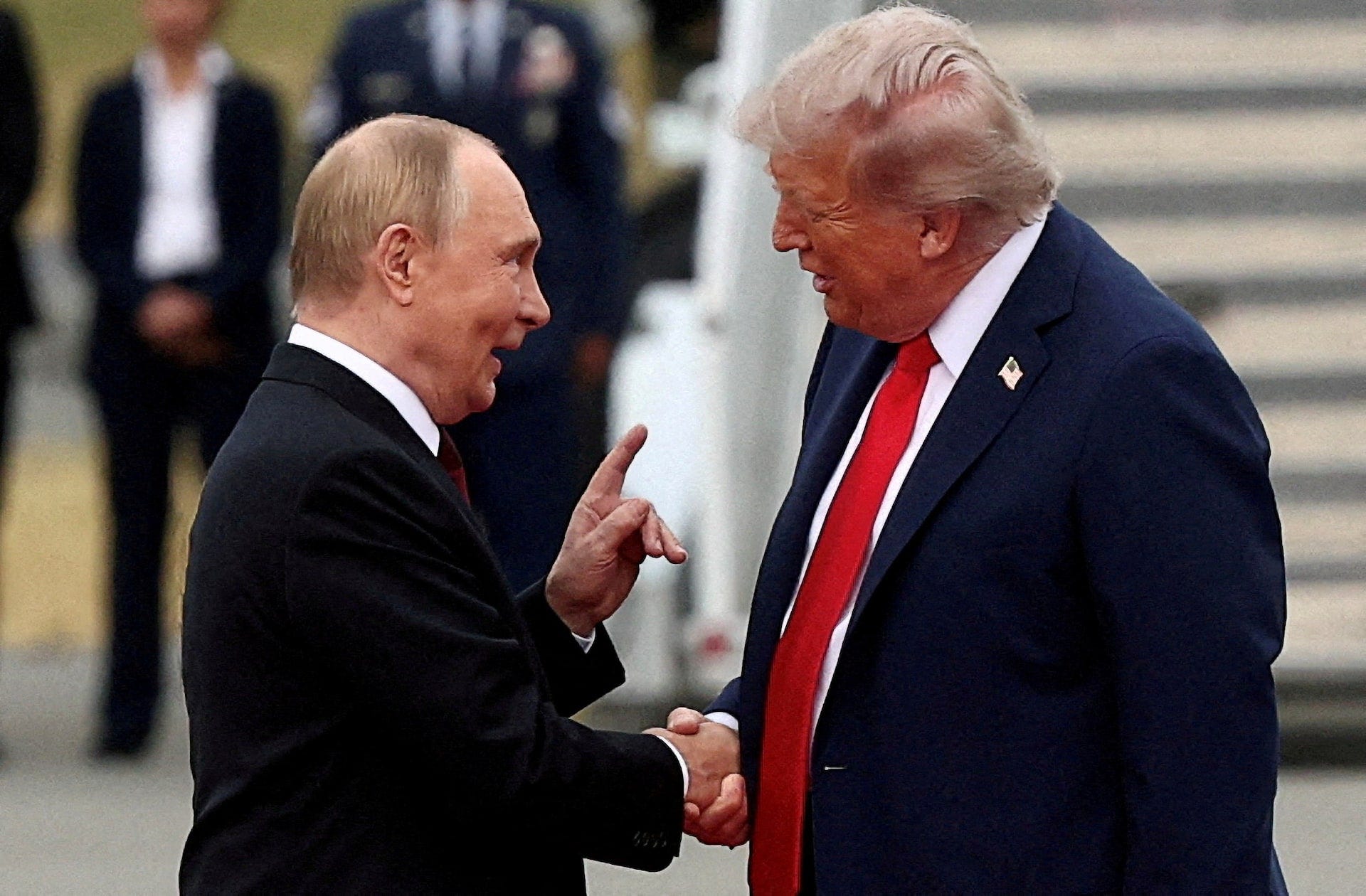
At the end of September, The Atlantic reported that Donald Trump had backed a plan to ease some sanctions on Russia in exchange for the release of Russian political prisoners. The idea apparently belongs to John Coale, Trump’s special envoy, who has already secured the release of hundreds of political prisoners in Belarus in exchange for sanctions relief, and the plan is still at an early stage.
In December 2025, for example, the United States lifted sanctions on Belarusian potash exports, and Lukashenko freed 123 prisoners, among them the Nobel Peace Prize laureate Ales Bialiatski. In March 2026, Coale announced that sanctions on Belarusian banks and on the potash producer Belaruskali would be lifted as well.
The human rights group Memorial currently lists 1,368 political prisoners in Russia, and rights advocates acknowledge the list is incomplete.
Whether such a deal with Russia is a good idea is a very difficult question.
The case for a deal
My colleagues and I were recently at the Parliamentary Assembly of the Council of Europe. The Council of Europe is the continent’s leading human rights organisation itself. At the Assembly, we discussed this question with human rights defenders. At first, they were enthusiastic about the proposal from Trump and his adviser.
Look at Belarus, they said. A huge number of political prisoners have been freed there, and perhaps there will be none left at all. Why should the same be impossible with Russia?
And indeed, if it were possible to free every political prisoner in Russia by lifting sanctions on certain people in Putin’s outer circle, on the houses, yachts and planes they want for a life of luxury, I would personally say: to hell with them, let them enjoy their yachts. What matters is that people stop being held in prison and dying there. Since the start of this year, I believe, five political prisoners have died.
But what’s in it for Putin?
But I very much fear that Putin has no desire to help his entourage live a more pleasant life, especially outside Russia. I think his only thought today is where to find more resources to keep crushing Ukraine.
And this is where a completely different question arises. Can we allow Russian political prisoners to be exchanged for lifting sanctions in a way that would let Putin produce more weapons or kill more Ukrainians?
Russia vs Belarus and my position
With Lukashenko, this problem does not arise. Belarus is not at war. If sanctions on his potash fertilizer exports are lifted, so what? He will steal an extra $3 billion and put it in his pocket. Perhaps one day he, his children or his grandchildren will use it for a life of luxury. That is not good, but in the end, to hell with him.
With Putin, the situation is different. If he gets an extra $10, 20 or 30 billion, that money will be turned into more missiles, and those missiles will kill more people in Ukraine. So we are talking about whether we can trade the lives of Russian political prisoners for the lives of Ukrainians. That is a completely different question.
My personal answer is that of someone who was a political prisoner. I was offered the chance of release in a situation where someone else would have had to pay for that release with their life. I refused. And I think any decent political prisoner would refuse such an offer. It is impossible.
Thank you for pointing out the difference between lifting of sanctions in exchange for political prisoners release in Belarus and in Russia. It's important to understand that in Russia's case Ukrainians would pay with their blood for such a deal.
Are there Americans held as political prisoners na-rossiya?