

In late March, Putin held a closed-door meeting with members of the Russian Union of Industrialists and Entrepreneurs (RSPP), the country’s most powerful business lobby. His press secretary Dmitry Peskov announced afterward that Putin had endorsed the idea of “voluntary” contributions from business to help fund the war in Ukraine. According to the Financial Times and The Bell, billionaire Suleiman Kerimov alone said he was prepared to contribute 100 billion rubles (roughly $1.2 billion). Metals magnate Oleg Deripaska is also reported to have agreed to contribute when asked.
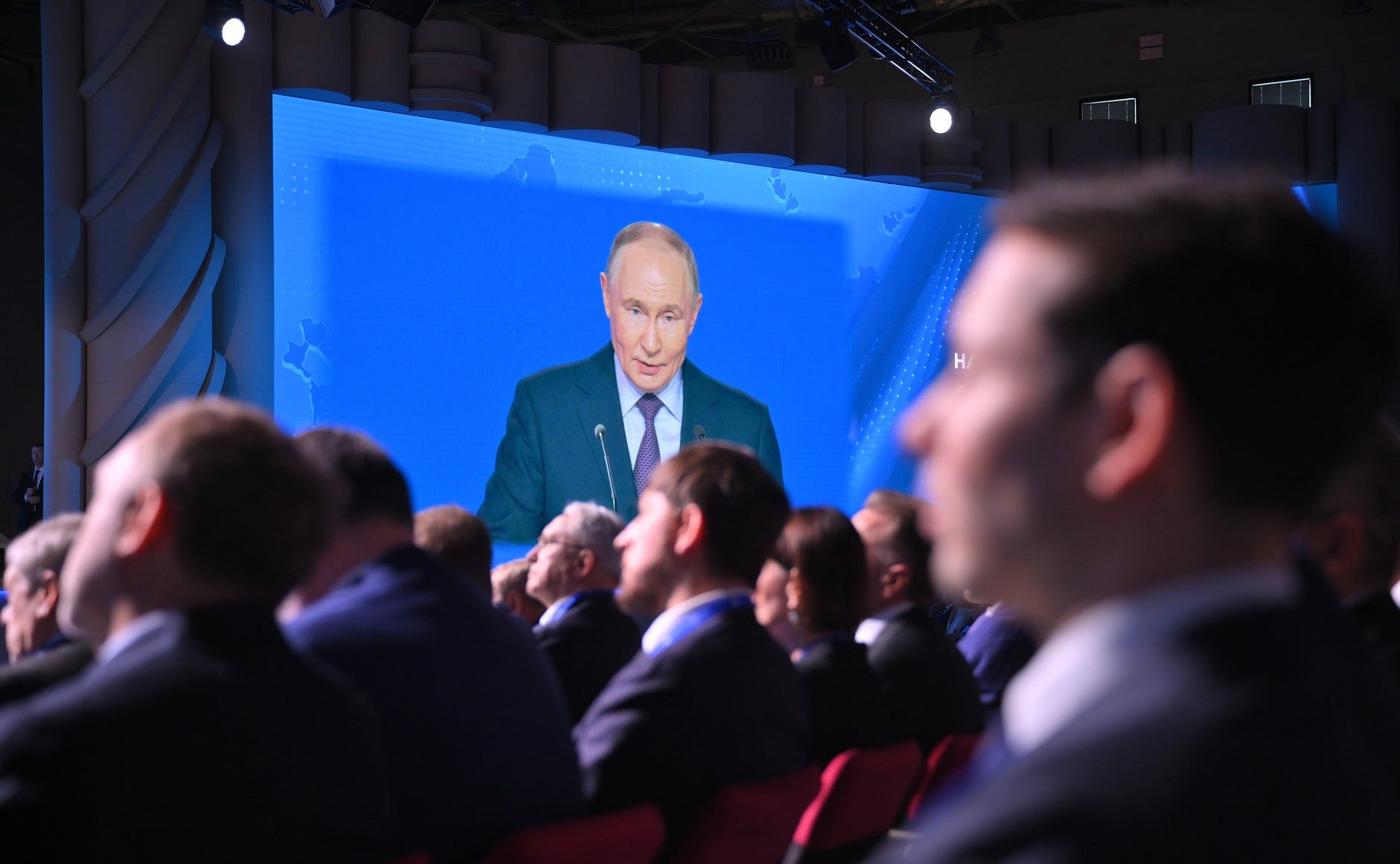
Many commentators interpreted this as a sign of desperation, proof that the war economy is running out of money. They are wrong.
The Russian budget has more effective instruments for extracting revenue than passing a hat among billionaires. VAT was raised to 22 percent in January. Corporate profit tax went up by five percentage points. A windfall tax brought in 320 billion rubles. The state does not lack mechanisms for collection.
What Putin sought from that room was not money. Even Kerimov’s 100 billion rubles would fund less than three days of war at the current rate of 259.4 billion rubles per week. Putin is now seeking loyalty and complicity: each businessman in that room publicly confirming that he stands with the war, finances the war, and bears responsibility for it.
Conditional ownership
The arrangement between the Kremlin and Russian big business was established in the early 2000s. The West calls these men oligarchs, but in the 1990s that word meant something specific — businessmen with genuine political influence, people who controlled media outlets and financed campaigns. The men who sat across from Putin in March have no such power. They are asset holders who manage wealth at the Kremlin’s discretion, permitted to generate profits in exchange for political loyalty and the absence of political ambition. My company, Yukos, was driven to bankruptcy. Its assets were transferred to state-controlled entities, and I ended up spending ten years in prison. My arrest came shortly after one of these same RSPP meetings, where I raised the issue of state corruption on camera and directly in front of Putin. The lesson was not subtle, and it was not lost on the rest of the business community.
Vladimir Gusinsky and Boris Berezovsky, who controlled major media outlets and wielded them with a degree of independence, were forced out of the country. Their assets were absorbed by structures aligned with the Kremlin. Loyalty shifted from a strategic advantage to a condition of survival. By the time Putin returned to the presidency in 2012 after the Medvedev interregnum, the unspoken contract had hardened further. The Magomedov brothers, co-owners of the Summa Group close to Medvedev, received nearly twenty years in a maximum-security colony and lost most of their holdings. Others, like Alisher Usmanov, read the situation and switched camps.
The full-scale invasion of Ukraine in 2022 transformed this system of conditional ownership into something more aggressive. More than 150 companies have been nationalized through quasi-legal mechanisms. Prosecutors revisit privatization deals from the 1990s or declare enterprises “strategic.” They cite procedural violations committed by regional authorities decades ago. Recent targets include the Dalpolymetal mining complex and Domodedovo airport. Prosecutors now routinely demand the return of assets privatized twenty-five to thirty years ago, arguing (often correctly) that the original transactions were flawed. The practical effect is that no business in Russia can be confident its property is secure.
Business participation in financing the war did not begin with this meeting. As Proekt and iStories have documented, companies connected to Oleg Deripaska, Leonid Mikhelson, Sergei Gordeev, and Mikhail Gutseriev have been involved in recruiting contract soldiers and providing supplementary payments since 2022. Informal channels have also been documented: contributions to state-affiliated funds and structures that operate outside the formal budget.
Ceremonies of allegiance
Putin has staged these rituals before. On February 21, 2022, he convened the Security Council on camera and forced each member to publicly endorse the coming invasion. The footage of officials stumbling through their approval, some visibly uncertain, all visibly afraid, became one of the defining images of the war’s first week. Three days later, on the day the invasion began, Putin met with the RSPP. All thirty-seven business representatives who attended were subsequently sanctioned by Western governments.

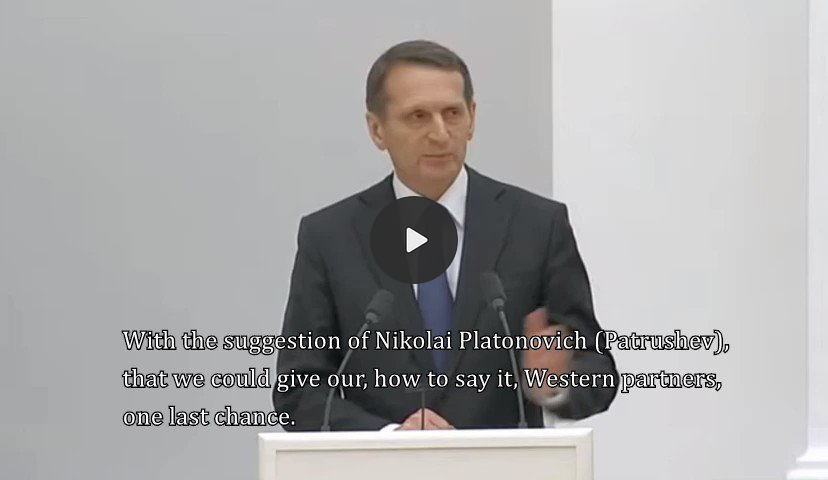
The March meeting follows the same logic. The economic contribution is marginal; it is the political symbolism that is truly important. By publicly agreeing to fund the war, each participant becomes personally invested in its continuation. They cannot later claim they were uninvolved or that the war was none of their doing — their names are on the ledger. Putin has ensured that the cost of defection now includes personal complicity in the financing of a war that the International Criminal Court has deemed criminal.
Western sanctions, paradoxically, have reinforced this dynamic. With assets frozen in Europe and the United States, Russian billionaires have fewer options for diversifying their risk. The war in the Middle East and the physical dangers of residing in the UAE, once a preferred refuge, have closed off one of the last remaining escape routes. Russia’s wealthiest citizens are locked in a room with Putin, and he has been methodical about removing the exits. The “voluntary” contribution is the price of remaining in the room.
What has changed
The system I knew in the early 2000s operated through ambiguity. Ownership was conditional, but the conditions were unspoken, and a businessman who stayed out of politics could operate with reasonable predictability. That system no longer exists. The conditions are now explicit and the penalties are public, while the scope of required loyalty has expanded from political silence to active participation in a war of aggression.
Thank you Mikhail for getting out of Putin's clutches.
You are a brave man Mikhail
Remember years ago Putin trying to humiliate you in the cage.
Your boldness, defiance and dissent embodies the great courageous Russian writers from Bulgakov, Gogol, Solzhenitsyn, and Tolstoi..
How can Russians taste the nectar of democracy with all its flaws and challenges?