

There have been no real elections in Russia for a very long time. And yet the special electoral operations conducted with such enviable regularity — the next is set for September 18–20, when Russians will "elect" a new State Duma — remain extremely important to the system. Viewing this performance as merely a fake vote misses its actual internal purpose. The process is not designed to offer a real choice but to serve three specific functions within Putin’s system of control.
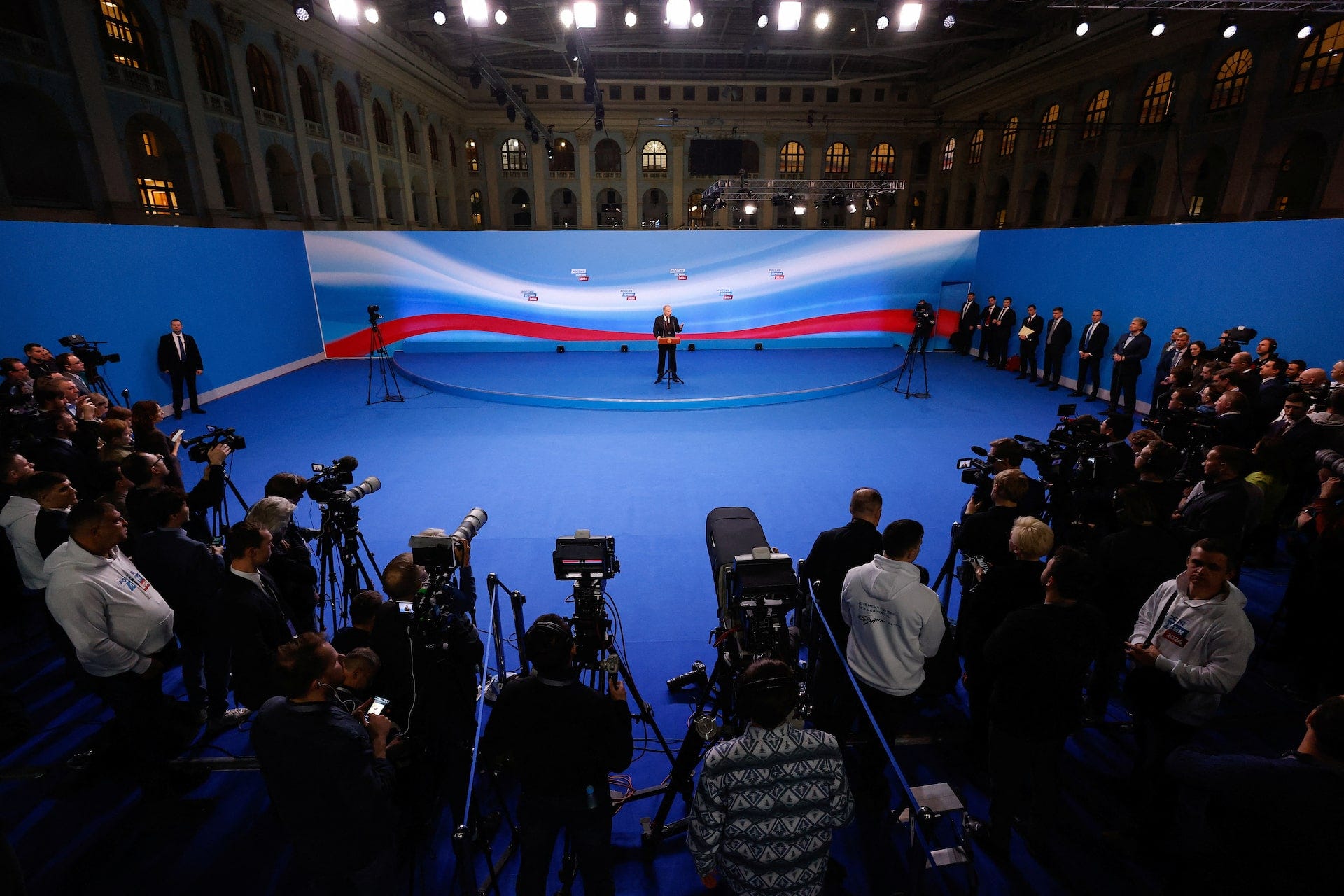
First, it stages political legitimacy. The election is engineered as a ritual referendum of trust to project an official mandate for ongoing war and economic hardship.
Second, it feeds two competing bureaucratic machines inside the state at once. The Russian bureaucracy is not a single monolith but a collection of factions driven by self-interest. The security apparatus profits by fabricating plots, prosecuting opposition candidates, and expanding repression to secure budgets and promotions. Meanwhile, political managers and propagandists profit by orchestrating electoral mechanics and selling political stability solutions to the Kremlin.
Third, it preserves Putin’s balance of power. Putin maintains control by balancing his two main pillars: repression and propaganda. Relying entirely on the security services would make him their hostage, while relying only on propaganda is impossible after years of full-scale war. Funding and empowering both sides through the election cycle keeps Putin in place as the indispensable arbiter.
Post-Election Mobilization
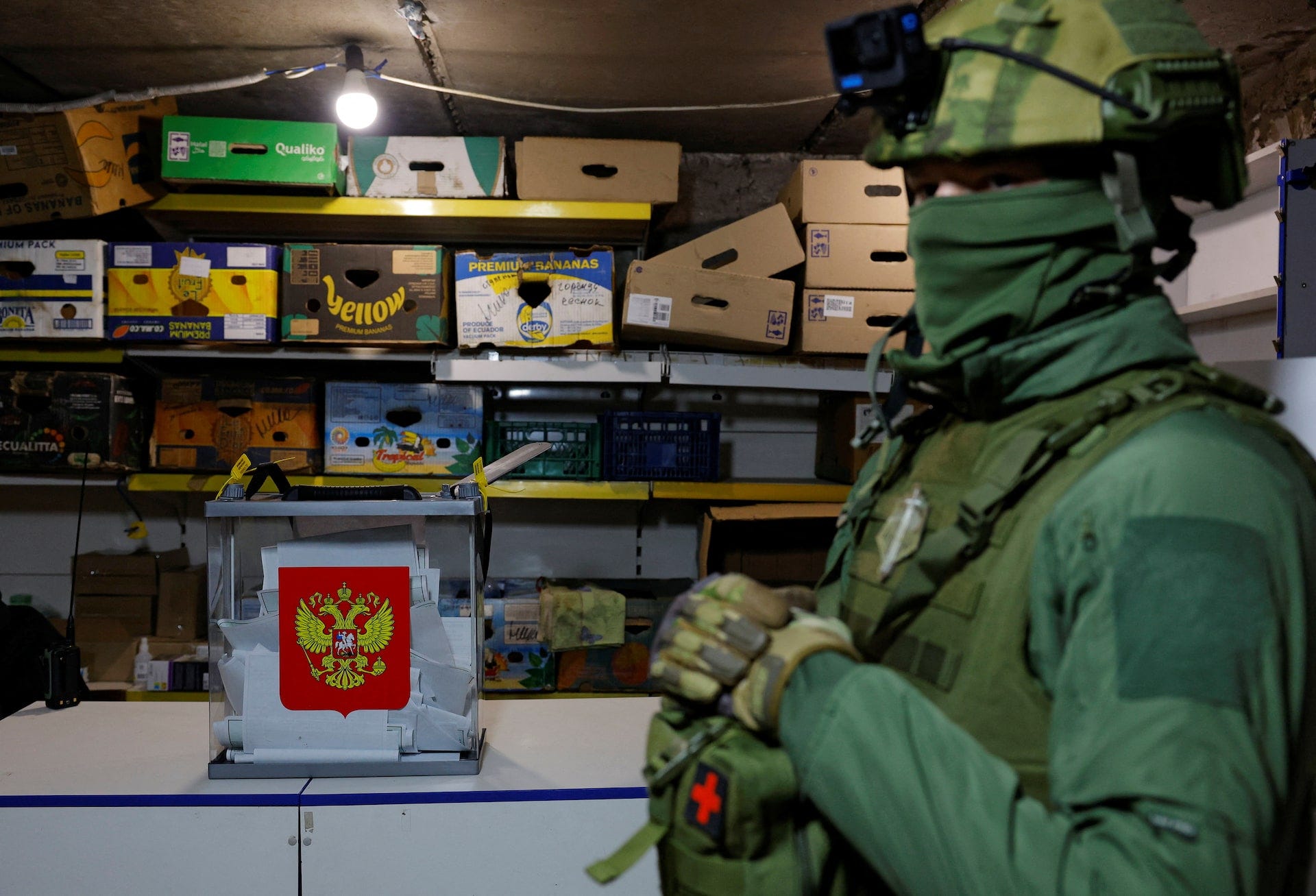
Once the election ends, the regime will shift toward escalating the war effort. The 2022 mobilization in Russia never stopped legally because Putin’s decree declaring it was never revoked; it was simply managed quietly to avoid public panic. However, current recruitment of roughly 30,000 men per month falls short of the military’s demand for 50,000.
After the vote, an intensified dragnet to pull men to the front line is inevitable. These recruits will be sent to the front with little to no training, serving primarily as a meat shield for professional units.
In an environment where Ukraine receives and produces massive numbers of drones, often more than one or two drones per incoming soldier, throwing untrained men into combat will not alter strategic outcomes. It will simply raise the monthly death and injury toll from 30,000 to 50,000.
Targeting Diaspora and the Limits of Repression
To sustain the war, the regime must manage its population on two fronts.
First, it must keep skilled workers and specialists inside the country. High-skilled personnel are the most capable of adapting abroad, making their departure a threat to the regime’s survival. Following the new wave of mobilization, tighter exit controls are almost certain, whether through formal laws, border checks, or administrative passport delays.
Second, the regime is moving to neutralize opposition abroad. Because effective collective resistance inside Russia is quickly crushed by the security services, organized opposition naturally operates from overseas. Recent laws restricting consular services, property sales, and document access for exiles tried in absentia amount to a de facto revocation of citizenship, accompanied by physical and psychological threats.
The post-election phase will force Russian citizens to choose between passive compliance, flight, or refusal. While resisting carries the risk of severe repression, the regime faces a hard mathematical limit: Russian prisons do not have the physical capacity to hold even two months of mass draft refusers.
If society collectively refuses to go to the front, the state cannot incarcerate everyone. Whether Russian society recognizes this bottleneck remains the central question following Putin’s electoral operation.
You realise that Putin is not going to be kicked out of power on september 20th. Do you know how high popularity this man has in Russia with 70 almost in the 80%. The political establishment in Russia have never been more unified, but keep putting a narrative behind everything going on in the war like establishment western media already do.
Pour résumer en conclusion, étant donnée la tournure usuelle que peuvent prendre (sans s'en priver) les organes de sécurité envers eux, les citoyens russes ont un triple choix : l'acceptation docilement soumise, la fuite (à l'étranger, voire se cacher en steppe grimés parmi les ours) ou le refus (expédiant en taule, sèchement).
De quoi se tâter avant d'agir, c'est-à-dire faire son choix.
Ce qui reste limité en largeur de perspectives actuelles