

Greetings, dear friends!
Another week has passed, so let’s talk about the questions it has thrown at us, from a world that is changing so fast you can’t keep up with it.
This is the English-language version of my weekly Q&A with followers, presented by the NEST Centre.
How to ask me a question:
Subscribe to NEST Pulse, the NEST Centre’s weekly newsletter.
After you sign up, wait for your first NEST Pulse newsletter to reach your inbox, then reply to that email with your question.
Make sure to start your reply with “Question for Khodorkovsky:”
Each week I pick a few of these questions to answer the following week.
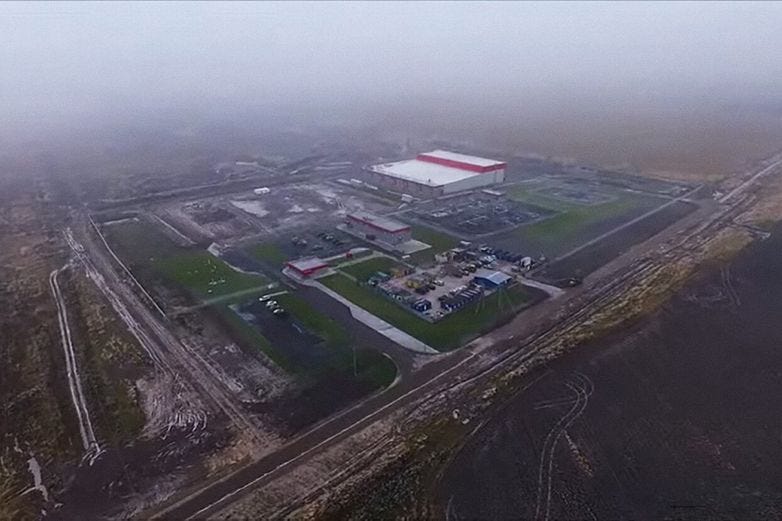
1. Can Ukraine’s strikes on data centers wipe out Russians’ bank accounts?
In October, Ukrainian drones hit data centers belonging to Yandex, Russia’s largest tech company. Sberbank, which the viewer mentions, is Russia’s largest bank.
Q: Ukraine is striking Russian data centers. How much could this affect the country? Could it set Russia back a hundred years, and what could fall apart? Could Sberbank lose the record of your account or reset it to zero? Could it lose the record that you repaid a loan? Could your e-tickets vanish just before a flight?
A: Well, e-tickets can vanish, and regularly do, without any Ukrainian strikes. So let’s set that aside.
As for accounts at Sberbank, of course they cannot disappear altogether. Or rather, the information about them cannot disappear. The money itself certainly can.
But this information cannot disappear as a result of strikes on data centers, because it is duplicated many times over and is stored in far more places than these data centers. Some records of transactions might be lost, but again, they are most likely duplicated, and after some sorting out they will be restored. This is not a critical part of the consequences of the Ukrainian strikes. And in this respect it is certainly impossible to say that the country will be set back a hundred years.
It is another matter that if these strikes continue, the infrastructure of the Russian internet, and of the businesses and services that depend on the internet and modern communications, will naturally start to crumble. And in many ways this is linked not only to the Ukrainian strikes but also to what the Russian authorities have done to the internet, to these systems of communication and data processing. I want to remind you that when the internet was created in America, the brief was precisely maximum resilience in wartime. The internet was built from the start so that strikes on individual parts of it would not knock it out.
Ha! But what can you do with people who can’t keep their hands off things? Roskomnadzor, Russia’s internet censor, very much wanted to be able to cut the Russian internet off from the global one, and so the law sharply reduced the possibilities for duplicating data and for storing it outside Russia. That, of course, reduced resilience. Then they installed filters. Then they installed additional equipment under SORM, the well-known system of state surveillance of communications, to monitor incoming and outgoing traffic. Then it turned out that installing it everywhere was somehow unprofitable, expensive and unappealing, so they decided to route the traffic through a limited number of points where it would all converge. And of course all this sharply reduced the resilience of the Russian network.
Then there are the supercomputers. Without big machines, this kind of full-scale work is not yet possible, especially now that Russia is cut off from the global network and from other countries. And there are few machines. They are mostly built from imported components, and with the technology sanctions imposed on Russia because of Putin’s war, those components are not easy to obtain today. So, clearly, the network has become less effective.
Clearly, further strikes could seriously complicate the work of businesses that depend on the internet. At the same time, things like bank accounts and records of repaid loans will most likely not be affected. But the ordinary businesses, services and conveniences we are used to will keep crumbling, and in many ways, I want to say again, not only because of the strikes, but because the Russian authorities, through their own efforts, have sharply reduced the resilience of the network and of communications inside Russia.
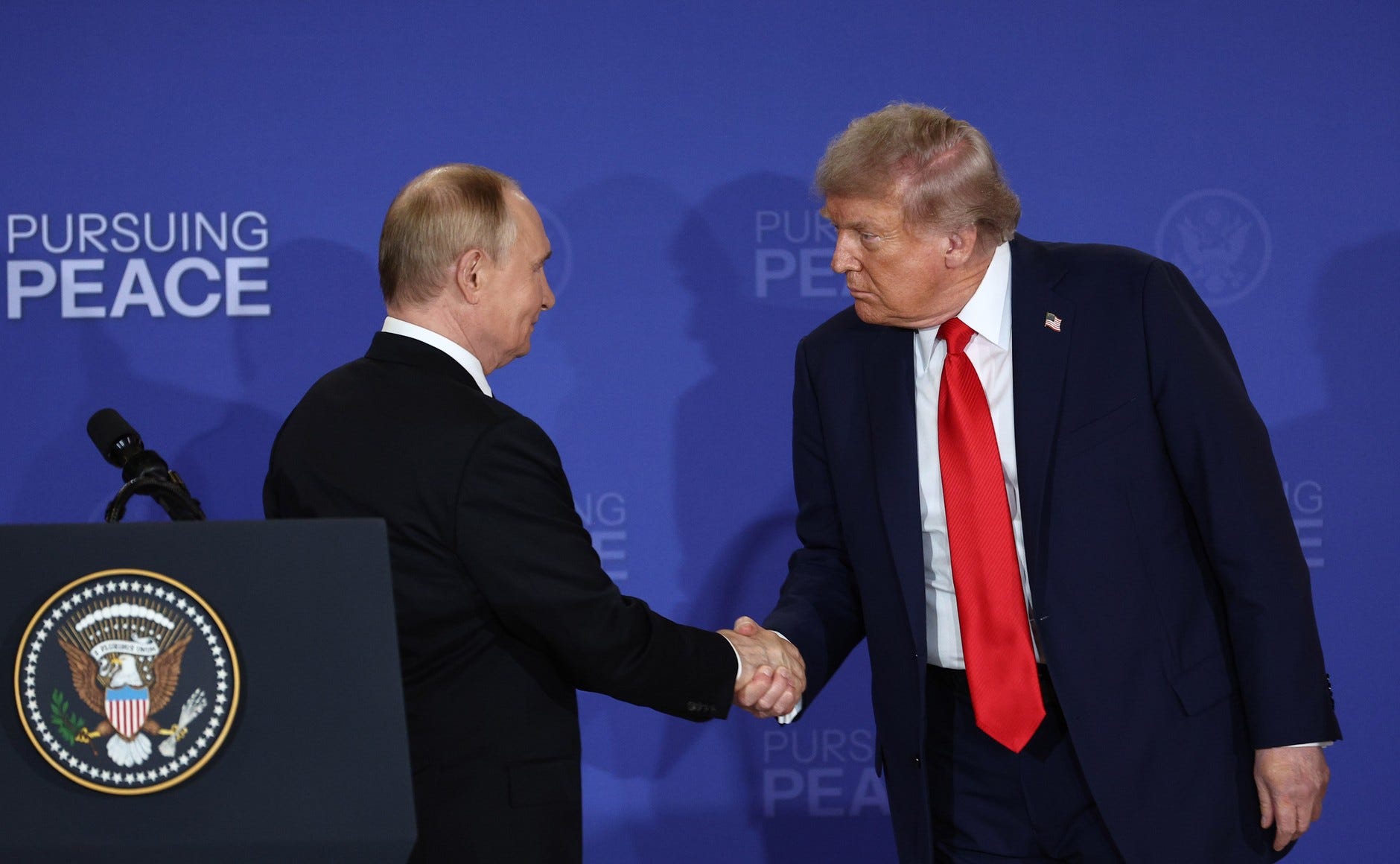
2. Why has Trump turned back to Putin?
On October 9, after a call with Putin, Trump announced a deal under which Russia would supply diesel to world markets, and the US Treasury temporarily waived sanctions on Russian diesel. Sparring with Zelensky over the deal, Trump said Ukraine should get a new leader. Since the war with Iran closed the Strait of Hormuz, US diesel prices have hit record highs. The US midterm elections are on November 3.
Q: Why has Trump suddenly moved closer to Putin again? What is this strange energy deal, or diesel deal, that nobody but the American president knows about or confirms? Why is Trump now openly demanding that Zelensky resign? Has Putin somehow managed to corrupt Trump?
A: Trump faces elections, and very soon: on November 3. Not his own, of course; his term continues. But the elections to Congress are just around the corner.
And there is a huge chance that the Republicans, and so Trump, will lose at least one house of Congress, and perhaps both.
That would not exactly tie Donald Trump’s hands completely, because even now he does not turn to Congress very often and mostly prefers to act through executive orders. Even so, Congress has the power, for example, to open investigations.
And these investigations, into Trump himself and into the people around him, will cost time, nerves and very, very bad PR. So for Donald Trump even the slightest chance of keeping both houses of Congress is fundamentally important, and he will try to do everything that serves it. Right now he thinks of practically nothing else.
And why is Congress slipping away from Trump’s team? Largely because of diesel prices, which jumped because of the war Trump is waging with Iran in the Middle East: the Strait of Hormuz is blocked, and many oil refineries in the countries of the region have been put out of action. All in all, this is no joke at all.
Blaming the fall in world diesel output on Ukrainian strikes on Russian refineries is, shall we say, a stretch. We are talking about roughly one percent of world diesel trade. Still, first, even one percent can move the price of diesel by a few cents or tens of cents, and that matters to Trump’s voters.
Second, he would like to show his voters that he is doing everything in his power to bring the price of diesel down, and that the obstacle is the very Ukrainians whom those voters support. We really must understand that Trump’s voters, by and large, support the Ukrainians. So pitting these two narratives against each other, “you are paying more for diesel because of the Ukrainians” and “you support the Ukrainians,” is what Trump’s team is doing now, because they need it to win, or at least to soften their defeat, in the coming midterms.
And I think there is no need to bring in extra explanations here, such as Trump being corrupted. I don’t know whether Putin is corrupting the president of the United States or whether that is not happening yet, but even without any corruption, this is simply in the interests of Donald Trump and his team. And he is acting precisely in his own interests. That Ukraine’s interests suffer as a result has, well, always left Trump fairly indifferent.
I would also note that emotions, of course, break through. Donald Trump has not forgotten that his first impeachment was tied to Zelensky. Trump asked Zelensky to do certain things that Zelensky could not do.
But Trump decided that Zelensky did not want to. He decided that Zelensky was backing the Democratic Party. I don’t actually know whom Zelensky backed, but Trump decided that Zelensky was backing the Democrats, and for Trump that was absolutely unacceptable. He holds it against Zelensky to this day. Whenever an opportunity like this comes up, when he can set the interests of Ukraine and Zelensky against the interests of his own voters, he immediately remembers it and says: let’s get rid of Zelensky, he has to go, and so on.
That this coincides with Putin’s narratives is perhaps a pleasant bonus for Trump’s team, but a bonus all the same, because they would of course like to reach an agreement with Putin specifically. They reason that Zelensky and Ukraine depend on them more and Putin depends on them less, so an agreement with Putin naturally matters more.
That, in fact, is what is happening now. Trump is playing along with Putin out of his own interests and his own emotions, and Putin, since nothing is working out for him on the battlefield, is trying to improve his position by persuading the Americans to undermine Ukraine’s ability to defend itself.
3. Can Ukraine hold out without American help?
Ukraine relies on American Patriot air defense systems, which can shoot down ballistic missiles, on SpaceX’s Starlink satellite internet, and on US intelligence for targeting and for warning of Russian missile launches. Palantir is an American company whose software combines large volumes of intelligence data.
Q: What will happen to Ukraine if America goes all the way and cuts off aid entirely? Can Ukraine hold out without Patriots, Starlink, and intelligence for targeting and for warning of launches?
A: Of course, all these elements are extremely important for Ukraine: the launch warnings, the missiles that can shoot down the ballistic missiles striking Ukrainian cities, the supply of other weapons, intelligence with targeting data, and intelligence showing where Russian air defenses are positioned. All of this, of course, helps Ukraine, which is the weaker side in this war, with far fewer resources than Putin. All of this helps Ukrainians hold out.
If America does refuse all this help, will it be hard for Ukraine? Undoubtedly, it will be hard. Will it be critical? Hmm, I wouldn’t say so, because Ukraine has enough allies. These allies, the European allies, have their own intelligence capabilities, their own targeting capabilities and their own early warning of launches. Unfortunately, all of this is very fragmented.
That is, it has not been brought together. There are systems like these, but they belong to different countries and have not yet been combined into one. But the technology already exists, including the technology of Palantir, which makes it possible to combine all this data quickly and effectively. And I am absolutely convinced that if the United States stops supplying intelligence of this kind, it will largely be replaced by European data.
I don’t really believe, or don’t believe at all, that Donald Trump and his administration are prepared to ban the sale of weapons to European countries, and through them to Ukraine, for money.
You see, right now, with diesel prices rising in America, the simplest way for Trump to bring them down would be to restrict exports. America produces more diesel than it consumes and exports a substantial share of it. If exports were restricted, the price of diesel in America would fall. For Trump this is extremely important. And yet he cannot bring himself to do it, because he understands perfectly well that a large part of his support rests on the companies, the people and the towns that depend on that price. And they will not let anyone hit them in the pocket. It is the same with weapons.
Trying to forbid American corporations to make money by producing this hardware and supplying it to Europe? For Trump, that would be fatal.
And we must also bear in mind that, as I have said before, around seventy percent of Americans, and certainly more than half of the Americans who count themselves among Trump’s supporters, favor continued support for Ukraine. And if it becomes clear that the Trump administration is leaving Ukraine in the lurch, banning it, denying it the ability to defend itself, well, that will not exactly win him votes. So it seems to me that the American administration can, naturally, create certain difficulties for Zelensky, and is creating them. Ukrainians will have to pay for these difficulties with a great many lives. And it seems there is no escaping that.
But a total switch-off of the kind that could dramatically affect Ukraine’s ability to defend itself will not follow.
4. Has Russia lost the AI race after the strikes on Yandex?
The Yandex data centers that Ukrainian drones struck house Russia’s most powerful supercomputers. Even before the strikes, the most powerful of them ranked 101st in the world. The independent Russian outlet Meduza has reported that the damage could set Russia’s AI development back by years.
Q: All three Yandex supercomputers, which are also the country’s main supercomputers, have been destroyed or badly damaged. Experts say that in the AI race even Kazakhstan is now ahead of Russia. How much of a problem is this for the country? Or is it just a temporary inconvenience?
A: First, I should say that as of today there is no confirmation that these three supercomputers have been destroyed. Some strikes have been carried out, but we cannot say to what extent they did final and irreversible damage to these computers.
Second, it is important to understand that in the AI race these supercomputers, which rank below 100th in the world, certainly play some role, but that role is completely insignificant. Today the race to build advanced AI is between China and the United States. Even Europe is effectively not taking part in it.
Moreover, to my deep astonishment and, in a sense, regret, Europe, with its highly qualified workforce and quite considerable means, has in effect excluded itself from this race. It is busy regulating the problems connected with AI. That is its contribution. In other words, it is reducing its competitiveness in this race even further. And Russia simply isn’t there. It just isn’t. You cannot make worse something that practically doesn’t exist.
Where is Russia present? In the use of AI. Besides the problem of creating AI, there is problem number two: how to put it to work, how to realize its potential to raise productivity. That task is important, a whole range of countries are working on it, and in this area Russia actually looks quite good.
But, as always, the dictatorship never sleeps; it cannot let anything develop freely. To develop AI, even in the sense I have described, to develop its use, you need access to the best models.
You need to work with Western cloud services, you need to reopen all those gates that have been half-closed. And the authorities do not want to do that, because for dictatorships openness is always a huge, huge problem. So I very much fear that even after achieving quite good results at the start, Russia’s AI industry will lose this competition, lose even to those who are in fact weaker in productive and intellectual potential. It will lose simply because the handicap, the weight on its legs that the Kremlin has piled on its own developers, its own young people working in modern technology, and keeps piling on, will at some point become absolutely unbearable.
And blaming this on the Ukrainian strikes would be rather laughable, though, clearly, the strikes are real too. But I want to say again: if everything worked normally, if the dictatorship were not a dictatorship, well, first, there would be no war at all. And second, modern digital systems would have been built from the start to withstand damage to individual parts.
It is only because Roskomnadzor could not keep its hands off these systems that even minimal strikes on them in Russia now knock them out.
We have to live with that.
5. Will limiting Schengen visas for Russians stop Putin’s saboteurs?
EU governments are discussing whether to issue Russian tourists Schengen visas valid only in certain countries rather than across the whole Schengen area. Germany reportedly proposed the idea. In September, Germany blamed Russia for an attempted drone attack on a Ukrainian cargo plane at Leipzig airport and tightened entry rules for Russians. The Parliamentary Assembly of the Council of Europe (PACE) has set up a platform for dialogue with Russian democratic forces, and I am one of its members.
Q: Several European countries are preparing proposals to restrict Schengen visas for Russians, to the point of effectively giving Russians only national visas rather than Schengen ones. How much will this whole idea help in the fight against Putin’s saboteurs, and will the Russian members of the PACE platform do anything about it?
A: Let’s be precise: this is not about national visas, which have their own advantages and drawbacks, but about limiting the territory where Russians’ visas are valid. Frankly, I don’t really believe this will help in any way in the fight against Putin’s saboteurs, because, as we now see, they have learned the ropes and use citizens of other countries for their criminal activity, including even citizens of Ukraine, who are not covered by any of these restrictions.
From this point of view, in my opinion, it is rather strange to restrict Russians by citing the need to counter Putin’s sabotage and saboteurs. And the existing restrictions already work today; they have sharply reduced the flow of Russians.
I have also heard another approach to this question, when representatives of Western governments say: well, Russia is at war with Ukraine, so why should Russians be holidaying here meanwhile, soaking up the sun? If they are at war, let them suffer. This has its reasons, but it also has obvious problems of its own. Tourist visas are the remaining means of communication between Russian civil society, anti-war Russians and the West, including the Russians who are in the West.
And when this is shut down and we are told that there will be special individual permits instead, it is clear that the Russian authorities could very easily block such individual permits, or at least make life enormously difficult inside Russia for the people who receive them.
I think this is a mistaken approach. I have explained why it is mistaken to our colleagues in Western governments, and we will keep explaining it. I think some changes are inevitable, but we will most likely manage to do something so that these changes are not so dramatic.
We will, of course, discuss this in December at the next meeting with the platform’s participants from European countries other than Russia.
What will come of it? We’ll see. There are plenty of arguments on both sides. And of course the sabotage carried out by Putin’s subversion and intelligence machine makes this kind of conversation very difficult: about Russian citizens, about visas for Russian citizens, including their humanitarian purpose, since many Russians have relatives abroad. All in all, it’s the usual story. Vladimir Vladimirovich Putin has landed all of us in serious trouble. Will we manage to get out from under it somehow? We’ll try. Though one more Leipzig, and the situation will be harder still.
6. Why did Montenegro send Rybar’s founder back to Russia?
On October 9, police in Montenegro detained Mikhail Zvinchuk, founder of Rybar, one of Russia’s most popular pro-war Telegram channels, together with four other Russians. Zvinchuk is under EU sanctions that bar him from entering the EU. Montenegro expelled him on national security grounds, and he is back in Russia. In 2024, the US State Department offered up to $10 million for information on Rybar’s interference in American elections.
Q: “Montenegro detained the founder of Rybar, the biggest pro-war Telegram channel. The Americans had offered ten million dollars for his capture. Montenegro simply deported him to Russia. What is the logic? Is Montenegro more afraid of Putin than of the US? Then why detain him at all? Did nobody in Montenegro want ten million?”
A: I would point out that the Americans offered ten million for convincing evidence that Rybar and similar outfits interfered in the elections and political systems of Western countries, mainly the political system of America. Not for detaining the man, but for evidence of his guilt and the guilt of the organization.
The more serious question is how a man under sanctions ended up in Europe: through whom he got there, how he obtained a visa, how he ended up on a plane. These are all big and serious questions which, as far as I know, will now be investigated in great detail.
We can assume this is about corruption, another act of corruption connected with sanctions. And there are a great many such cases of sanctions-related corruption, including in Europe. I very much hope this particular case will be properly looked into.
That Montenegro, lacking proof of the man’s guilt, decided to send him to Russia specifically, and not anywhere else, only shows that all the talk about the justice system not really working in Europe is deeply mistaken. The legal system in Europe does work. If a person finds himself in a tough legal situation, he can be sure that even if he is in the wrong, even if he really is a criminal, the legal system will protect his interests. And if the evidence of his crime is insufficient, he will manage to get out of that situation. It is another matter that the whole machine of European justice catches up with everyone in the end. Everyone it considers important to catch, it catches, after ten years, twenty years, thirty years. This adversarial system is often hard for us Russians to understand, but it exists.
7. Did Russia cause Brexit?
On October 11, Prime Minister Andy Burnham said it was “clear” that Russia had interfered in the 2016 referendum on leaving the EU, which Leave won with 51.9% of the vote. Afterwards, his spokesman said the government did not believe Russia had succeeded and considered the result legitimate.
Q: “The British prime minister has said that Russia interfered in the referendum on leaving the EU. Given that Leave won with less than 52% of the vote, do you believe Russian interference led to Brexit and changed the makeup of the EU?”
A: We know that the British prime minister has since made clear that journalists misunderstood him: he did not say that Brexit happened under Russian influence or because of it. There was some influence, as I understand it, and it will most likely be proven. But it is absolutely certain that the polls showed exactly what happened: that the Brexiteers were winning by a small margin. People here know how to count votes; in that sense everything here is very precise. And it is also absolutely certain that a significant part of Britain’s political elite campaigned hard for Brexit. In my view that was a mistaken position. I said so at the time.
And the funniest thing, you know, is that a great many people in Britain, now that they have understood what Brexit led to, are absolutely certain that they voted against it. You ask people: “Why did you vote for Brexit? Do you see what you’ve got out of it now?”
“Me, for Brexit? What are you talking about? Never!” And you see that more than half the country actually voted for Brexit, but now fewer than a third say they voted for it. How does that happen? Well, it just does.
It happens in Russia, and it happens here in Britain too. People don’t want to remember that they made a serious mistake that hit them in their own pocket. I think these mistakes must be corrected, and they most likely will be.
8. MEPs who visit Moscow, and visa limits for ordinary Russians
The Insider, an independent Russian investigative outlet, has found that one in ten current members of the European Parliament has visited Russia since it annexed Crimea in 2014, and that some still travel there to meet politicians, officials and even spies - like Sergei Naryshkin - who heads Russia’s Foreign Intelligence Service (SVR). In September he accused the EU of interfering in Russia’s parliamentary elections, and on October 8 the European Parliament voted not to recognize the newly elected State Duma as legitimate.
Q: “The Insider writes that many members of the European Parliament have kept traveling to Russia since the war began, and some even meet Naryshkin. How does this square with the constant tightening of restrictions on Russians? Why doesn’t anyone stand up at a session and say: ‘This MEP met the head of Russian intelligence yesterday’? That is far more dangerous for democracy than giving a Finnish tourist Schengen visa to a teacher from St Petersburg.”
A: Well, it is absolutely true that corruption inside the Western political system is far more dangerous than some visas for ordinary Russians.
Absolutely true. And everyone understands this perfectly well. The difficulty is that it is very hard to prove a situation like this, a direct link of this kind. Though sometimes it is very funny. When we held hearings in the European Parliament on the Russian elections, Mr. Naryshkin, the head of Russia’s Foreign Intelligence Service, put out a statement that went roughly like this: various renegades are doing everything they can to smear our most honest elections, and we will counter them in every way. And the next day, during these hearings, eight members of the European Parliament from various parties, mostly extremely radical ones but members of the European Parliament nonetheless, came and started disrupting the event. So we can plainly see a direct instruction going from Russia’s foreign intelligence service to members of the European Parliament, and some of these members carrying it out.
What is even funnier is that Russia’s foreign intelligence service is burning its agents on an utterly stupid and pointless fight over how the vote that took place should be judged. That it has nothing to do with honest elections is so obvious. And it was so obvious that Europe would take an unequivocal view on this, that burning your agents for the sake of it, well, you know, that is something that often happens in dictatorships.
The master gave the order, and the servants don’t stop to think. What choice do they have?
So such agents exist, and Putin works effectively with his agents; we have seen this in many examples, and it must be fought. And of course, the way this goes on at the same time as the restrictions on Russians looks extremely unpleasant. Just as unpleasant as when sanctions were imposed on ordinary Russians while super-rich Russians were taken off the sanctions lists, having managed to create, let’s say, conditions in which these same Western politicians voted to take them off. All of this looks terrible. And don’t think we don’t talk about it. I spoke about it quite directly several years ago in the European Parliament. I told the MEPs sitting there to their faces: we know about you, you are in effect carrying out unlawful instructions, we know this about you. There was a big scandal, but I don’t know how much it helps. I hope it does.
That’s probably all for today. I look forward to new questions, and let’s pick up the conversation in a week — subscribe to NEST Pulse here and follow instructions on top of this article to submit your question.
There will surely be plenty that’s new. I hope that over this week the situation between Donald Trump’s administration and Ukraine will settle down somehow, because American society, the voters, stand on Ukraine’s side.
Thank you, and until next time.
Thank you for an enlightening newsletter. I learned some things from it. And in a media world filled with AI dreck, misinformation, disinformation, and unreliable narrators, it is nice to get information that seems on the level. Information about things that mainstream media doesn't seem to understand nor interpret correctly. Especially TV news. Which, unfortunately, is where most people seem to get their news. Your newsletter makes it clear that there is no substitute for good old fashioned reading. Congratulations on a job well done.