

Many in the West still view the Russian opposition through the lens of personalities: Navalny, FBK, famous dissidents, YouTube channels, investigations. But what the opposition is truly lacking is political structure. This is a problem with implications that go far beyond Russia itself.
For years, much of the democratic world treated Russian opposition politics as primarily a moral phenomenon: brave people exposing corruption and denouncing dictatorship. Important work, certainly. But moral opposition alone does not create a viable post-authoritarian political order.
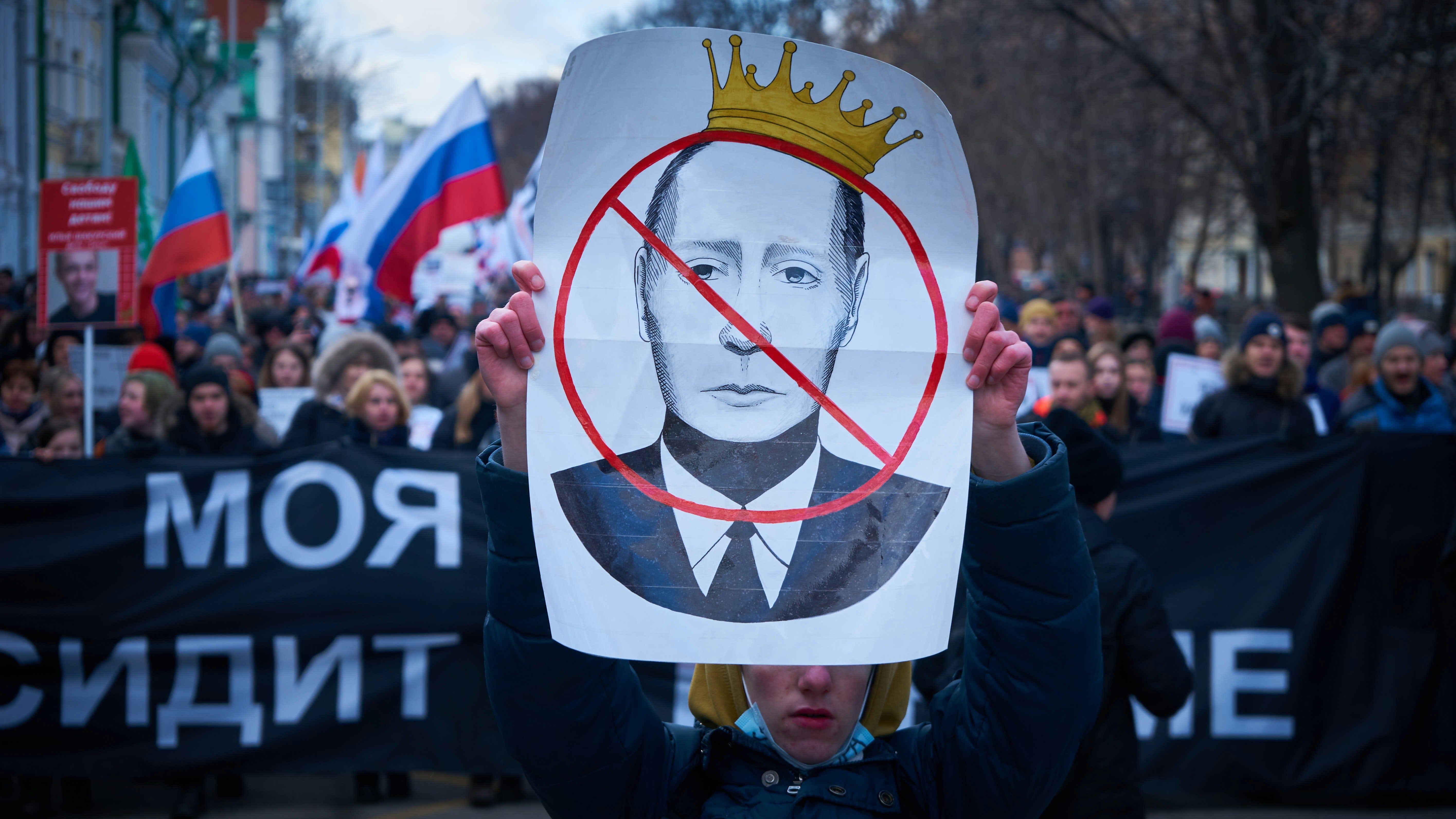
The central problem is that Russian opposition structures in exile still struggle to answer a basic strategic question: what are we actually trying to build?
Armed or underground resistance inside Russia is not a realistic option for the urban middle class under current conditions. Russia today is a highly securitized state with enormous surveillance capacity, an atomized society, and very limited public willingness to accept the personal costs of open rebellion.
That means the real task of the opposition is not to “spark a revolution.” It has to build ideological leadership capable of shaping Russia when the current regime eventually weakens or fractures. This distinction is crucial because history has shown what happens when authoritarian systems collapse without organized democratic alternatives ready to fill the vacuum.
The fall of a dictatorship does not automatically produce liberal democracy. Sometimes it produces chaos, sometimes fragmentation, and sometimes another authoritarian regime emerges with softer language and better public relations.
At the moment, much of the Russian opposition still revolves around a charismatic model of politics. This is understandable, but deeply fragile. Movements built around irreplaceable figures often struggle to survive the loss of those figures.
More importantly, charismatic politics tends to reproduce the very political culture it claims to oppose: excessive personalism, moral absolutism, intolerance of internal disagreement, and weak institutional thinking.
Russia has plenty of individual Kremlin critics, but the movement lacks ideological diversity. There are few organized liberal, conservative, social democratic, regionalist, or institutionalist movements capable of articulating distinct visions for the future, and too many opposition figures still try to remain “above ideology” to maximize their reach.
Without ideological structuring, there can be no meaningful coalition politics after authoritarianism. A democratic transition requires organized groups that already know who they are, what they believe, and what compromises they are willing to make.
Otherwise, the eventual transition inside Russia will be shaped not by prepared democratic actors, but by whoever possesses money, coercive power, media access, or informal networks at the moment the system weakens.
Western observers should not think of this as an abstract intellectual debate among exiles. It has enormous implications. Russia remains a nuclear power, a major military actor, and one of the central destabilizing forces in European security. Post-Putin infighting, revanchist nationalism, or continued authoritarianism would not be confined within Russia’s borders.
The West spent decades assuming that economic integration alone would gradually moderate the Russian state. That assumption failed. It would be dangerous to make a second mistake by assuming that the mere disappearance of Putinism will automatically produce a stable democratic Russia.
Political systems do not emerge spontaneously from moral outrage. They require institutions, ideological currents, organized interests, and people capable of governing rather than simply resisting. That is the real challenge facing the Russian opposition now. And whether it succeeds or fails will shape not only Russia’s future, but Europe’s as well.
Good to be brought to the knowledge of any thinking beings, both closely & far concerned. Experimentedly suggesting point of view
Ok. So what do you propose, Mikhail?