

While both sides perform readiness to fight indefinitely, Russia and Ukraine are likely to head back to negotiations in the coming weeks. The performance will be partly for the cameras and partly for domestic consumption — the obvious deadlock at the frontlines has exhausted audiences on both sides, and Moscow’s military ceiling is becoming obvious.
Russia is formally continuing its offensive in several directions at a slowing pace and with not a lot to show for it: in March 2026, Russian forces took just 23 square kilometers (8.9 sq miles) of new territory, while Ukraine regained the initiative and recaptured about 50 square kilometers in the south.

The energy contest produces costs without breakthroughs
Both sides have responded to battlefield stagnation by escalating long-range strikes. Russia has intensified drone and missile attacks on Ukrainian cities and energy infrastructure. Ukraine, in turn, has concentrated on Russian oil and targeted refineries and export ports hoping to drain the revenue that finances Putin’s war.

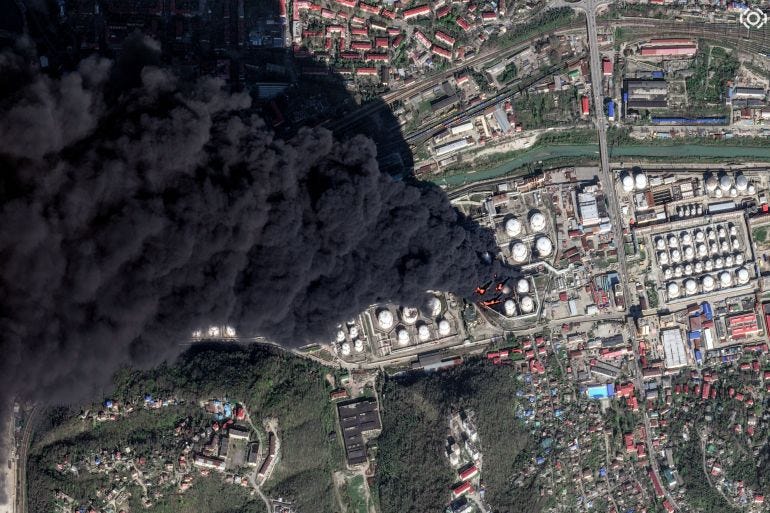
The campaign was tactically successful: between March 25 and April 11, Ukrainian attacks cut average daily shipments from Russian ports by roughly a third. In just over two weeks, 30 million barrels did not reach export markets, and the strikes exacerbated Putin’s PR problem by producing vivid imagery of infrastructure on fire and leaving residents of refinery cities without electricity. But it has not broken the war economy. The rise in global oil prices, driven by tensions in the Strait of Hormuz, allowed Moscow to absorb the lost volumes through higher unit revenue.
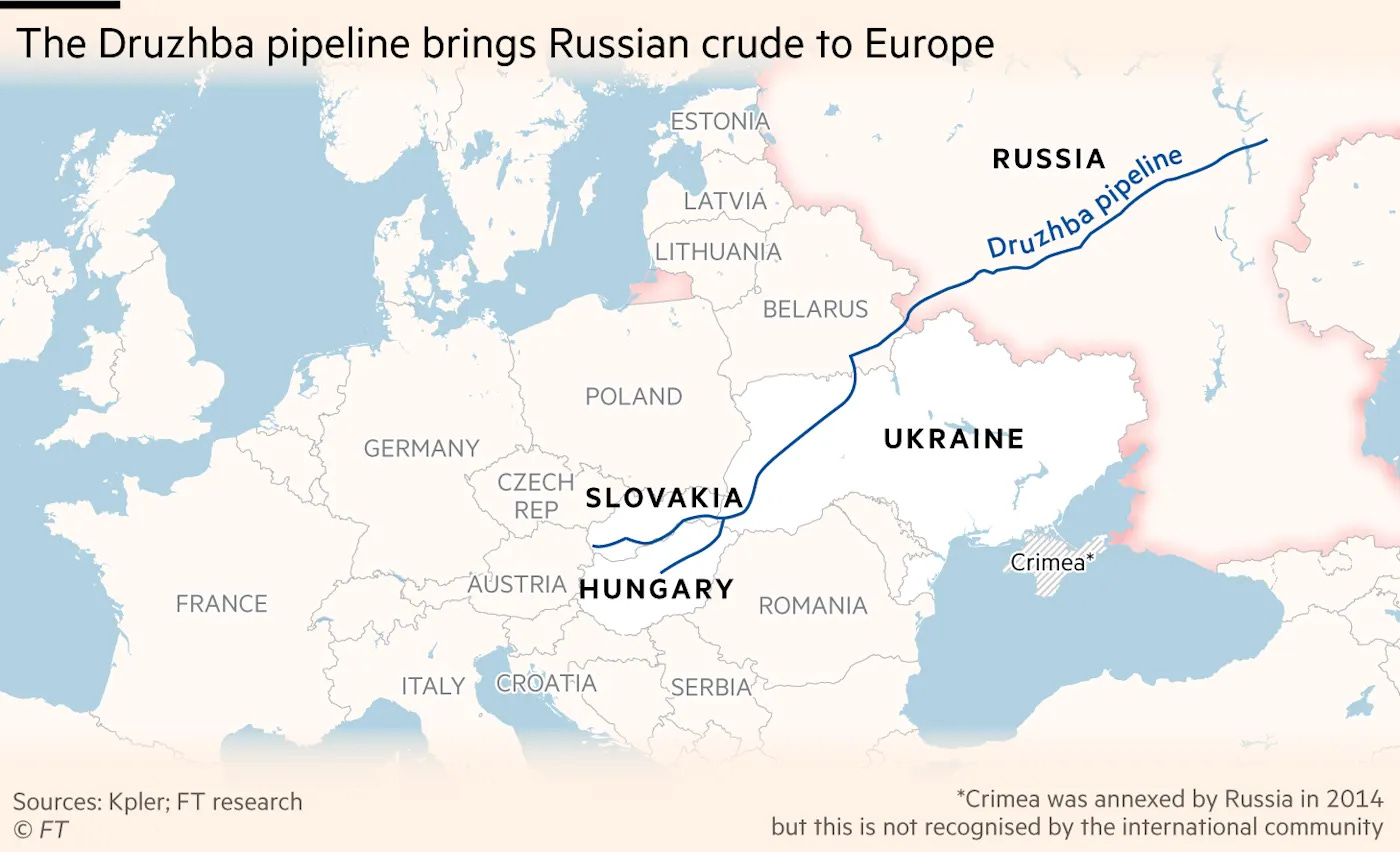
The Druzhba pipeline, which runs through Belarus into Poland and Germany, has become its own theater. For three months, Ukraine has used the southern segment of the pipeline it controls to pressure Hungary and Slovakia, the two EU governments most consistently obstructing aid to Kyiv. Moscow has responded by weaponizing the northern branch: starting May 1, Russia will halt the transit of Kazakh oil to Germany — one of Ukraine’s largest arms suppliers. Russia has pledged to compensate Kazakhstan for the reduction in its export capacity elsewhere; Germany is projected to lose 2.5 million tons of imports annually. As with every other front of this war, the energy contest yields costs without any meaningful breakthroughs.
Sanctions follow the same logic. The European Union has just adopted its 20th sanctions package. Its principal innovation is an attempt to penalize third countries that help Moscow circumvent existing measures. The first such country is Kyrgyzstan, which can no longer receive computer numerical control (CNC) machines or telecommunications equipment from EU members. Last year’s relevant dual-use exports totaled less than $770 million — marginal as pressure. And whatever pressure it does apply can be offset by loosened U.S. restrictions: just a week earlier, Washington had extended through mid-May a waiver covering transactions in Russian oil already loaded onto tankers before April 17.
What the war still produces is mostly content for state media
The Putin regime can still sustain the war economically and politically for some time longer. What it cannot do is win it on terms that justify the cost. After more than four years of full-intensity warfare, Russia has reached the ceiling of what its army can extract from this front.
Inside Russia, Putin’s approval rating has just registered its largest drop in four years. At the same time, public discontent is growing — internet shutdowns, bans on messaging apps, and worsening economic conditions more broadly. For now, that discontent is mostly visible online. More telling is the shift among pro-war bloggers: their audiences run into the millions, and they increasingly question in public whether continuing the war makes sense given the absence of any visible gains.
Ukraine is also tiring. In early 2026, 65 percent of Ukrainians said they were prepared to fight as long as necessary. By March, that figure had fallen to 54 percent. Daily missile strikes on civilian and energy infrastructure are wearing down a society four years into a war it did not start and cannot afford to lose. The window for negotiations, when it opens, will not stay open indefinitely.
What to make of it
Under these circumstances, the diplomatic process will likely resume in weeks, perhaps months. As cynical as it may sound, negotiations with Putin should not be treated as an alternative to war, because he will use the pause to regroup and rearm. Without locked-in Ukrainian territorial integrity, security guarantees with enforcement mechanisms, and the ability to reimpose pressure quickly if Putin breaks them, a ceasefire is simply the runway for the next phase.
It would be wise for the Europeans to accelerate arms deliveries before talks begin and to recognize that what happens inside Russia during this window matters more than anything Russia agrees to at the table. This deadlock is exposing the regime’s limits; the work now is to make that exposure compound rather than fade.
Makes sense. Just surprised people still talk about security guarantees at this point. As shown in the Iran war, even the US is perfectly incapable of fighting a second-rate drone army. At this point only Ukraine can match (or beat) Russia's drone performance, so who the heck can give any form of security guarantee?
Unless they talk about Ukraine giving security guarantees to the Baltic states? Possibly more the point.
Just an observation: a single Lukoil station in PA only had regular petrol for sale. I wondered how much was due to the war in Iran, how much was due to UAF drone strikes, and how much was ordinary supply problems.